“Buildings by KPF Architects” presentation
At 2:00pm on Thursday May 7, one of...
At 2:00pm on Thursday May ...

At 2:00pm on Thursday May 7, one of...
At 2:00pm on Thursday May ...
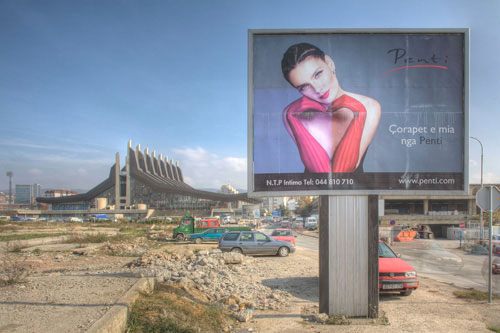
© Günter Richard Wett
Bad Architects Group announced their publication “Prishtina Capital”. This publication edited by Ursula Faix and Paul Burgstaller contains contributions by Edmond Hajrizi, Thomas Hrabal, Georg Grasser, Binak Beqaj, Arno Ritter and students projects from the University of Business and Technology, Prishtina. Additionally it contains amazing city portrait photographs of Prishtina, by Günter Richard Wett.
Kosova Association of Architects is organizing the Annual...
Kosova Association of Arch...
Earlier in 2007, the Municipality of Prishtina completed a design competition for the project of Opera House of Prishtina, and announced German studio “ARW Architekten” as the winner. The project had then an estimated cost of 20,5 million euro and created a great controversial debate in the general public, but also architects in between. One of the main accusations was that the entire project was a waste of money, especially since the winning proposal was a scandalous example of lack of creativity and quality design. An opera house should be a landmark building and an architectural inspiration to the city.
Cities targeted during the Kosovo conflict are ready for regeneration. What infrastructure do war torn cities need to sow the seeds of development and civic life? Arts / culture / sports / commerce / roads and rail transport at one extreme; tourism / oil pipelines and other resources / freight and freeways / foreign investment / military bases at the other.
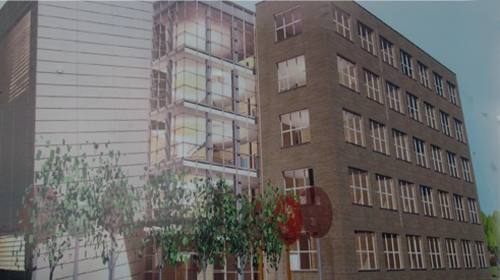
New building for the Faculty of Education, will be build in the main University area of Prishtina. Exactly just a few meters away from National Library of Prishtina.
The announcement of a competition for a new...
The announcement of ...
BAD-INN (University for Business and Technology in Prishtina, Kosova) invited BAD-MIL/Lorenzo Bini (Politecnico di Milano) with Prof. Gennaro Postiglione to lead a joint-workshop in Pristina, during November 2008. 5 students from Milan, Italy and 10 students from Pristina, participated in this urban design workshop.
After NATO-led KFOR troops ended civil war in Kosovo (1999), an instant building boom changed the capital Prishtina dramatically. Within a few years its population doubled, partly as a consequence of an influx of returning refugees. Local investors profited, creating quick returns on ‘hit and run’ projects. On the fringes of the city ‘maverick urbanism’ had a different face: family clans invested family capital in large houses, built on farmland. The result was a random spread and development of the city, causing serious functional and structural problems for the future.