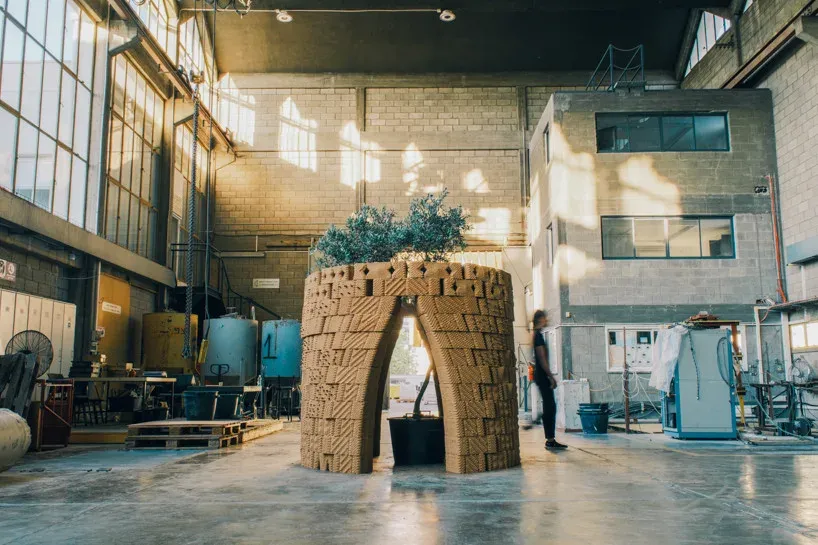
BUSTAN Builds an Earth-Brick Shelter Around a Living Olive Tree
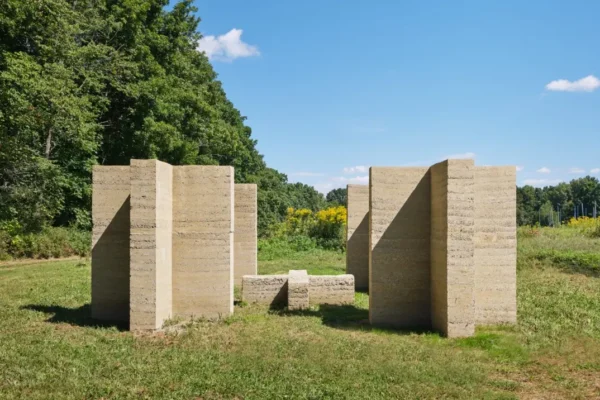
BUSTAN begins with a living olive tree rather than an empty room. Presented at Design Museum Holon in 2026, the pavilion gathers 178 robotically printed earth bricks around the tree, making an enclosure whose openings are as important as its solid parts.
Developed by the Material Topology Research Lab at the Technion with the Weizmann Tree Lab, the work explores how architecture might shelter other forms of life. Its name means “orchard”, placing this contemporary experiment within a longer history of cultivated landscapes.
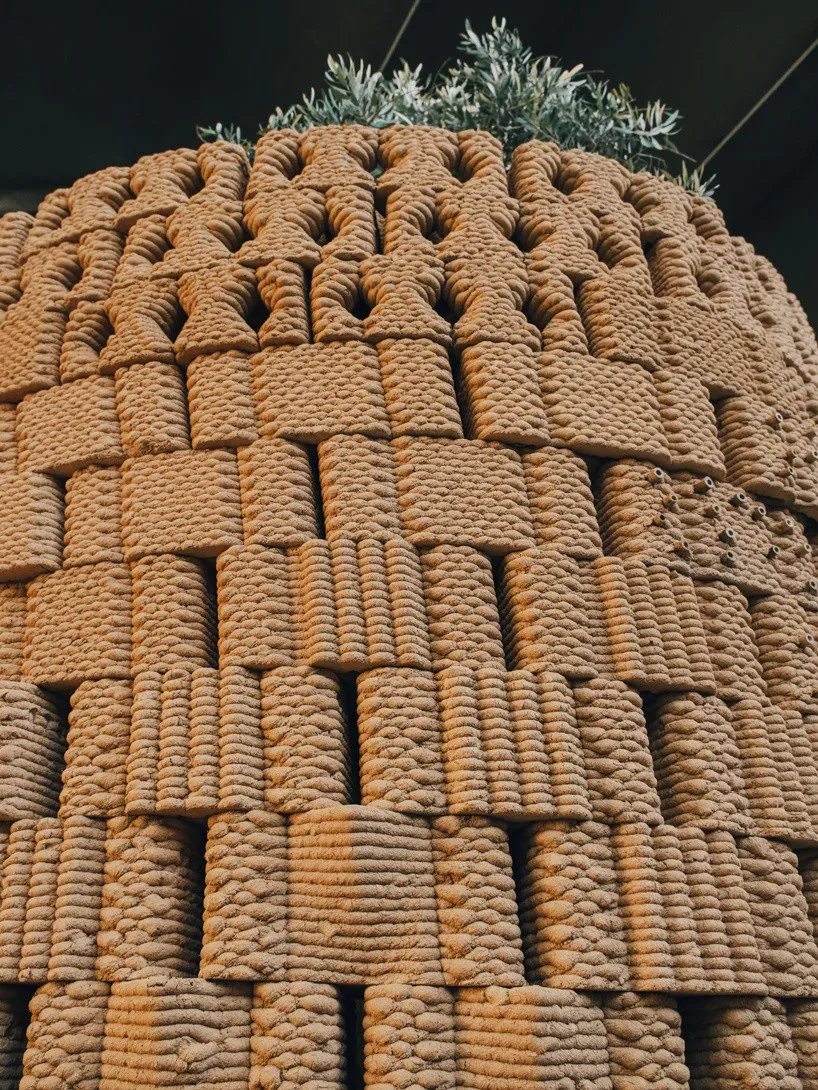
The bricks are made from an earth mixture incorporating plant fibres and mineral binders. A robotic arm builds them in successive layers, giving each piece its form and surface texture. Instead of treating the wall as a uniform barrier, the design varies its bricks and openings to provide shade, let air pass and create places that could support small species.
This makes the pavilion a useful reversal of a familiar architectural question. A wall usually separates a controlled interior from the conditions outside. Here, the enclosure is designed around a tree’s needs and the possibility of sharing space with other organisms.
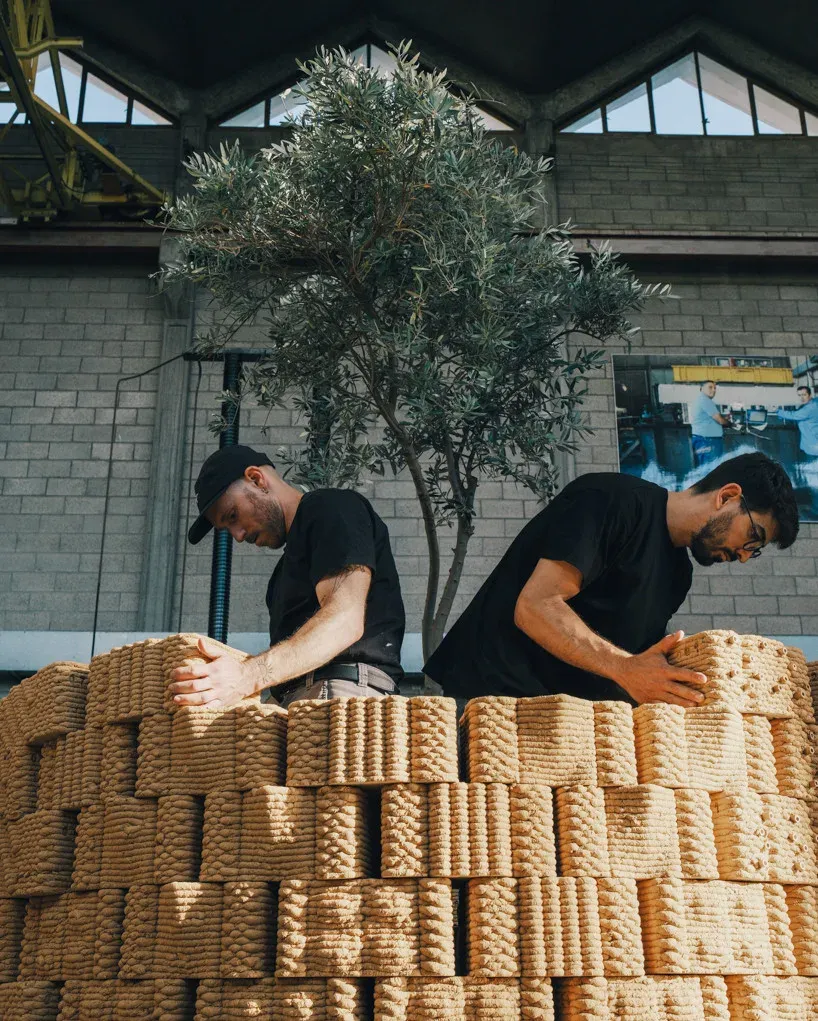
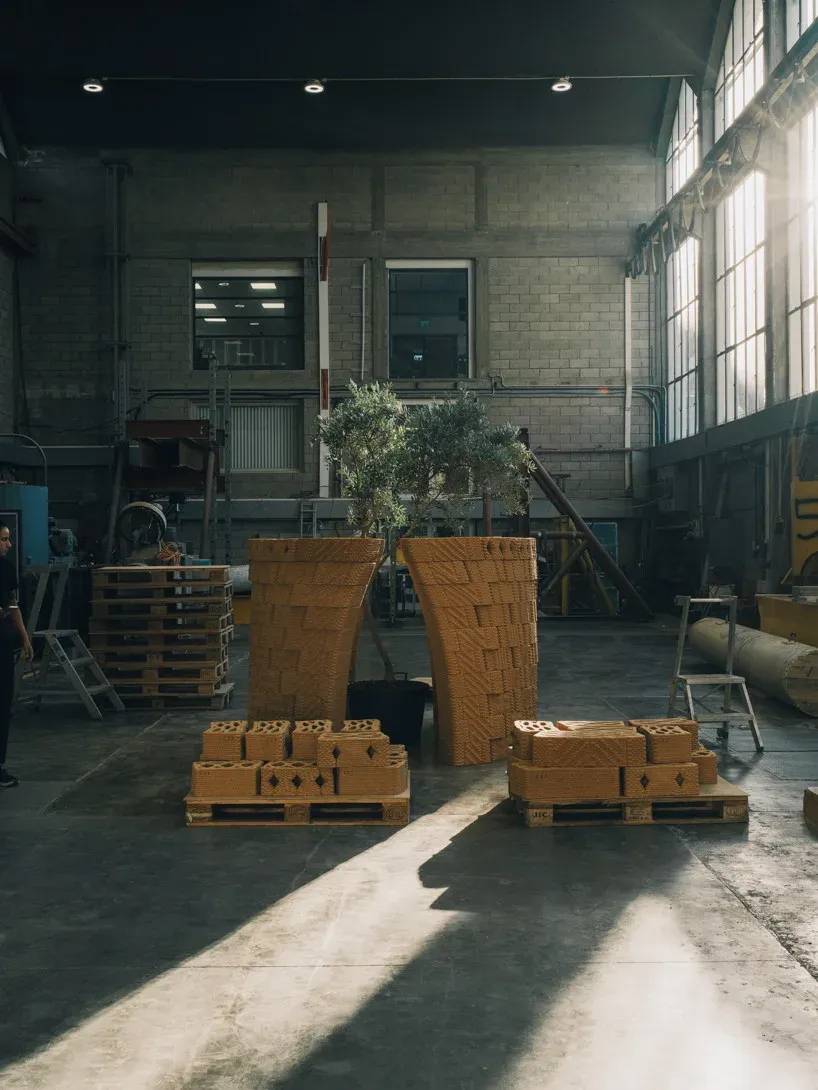
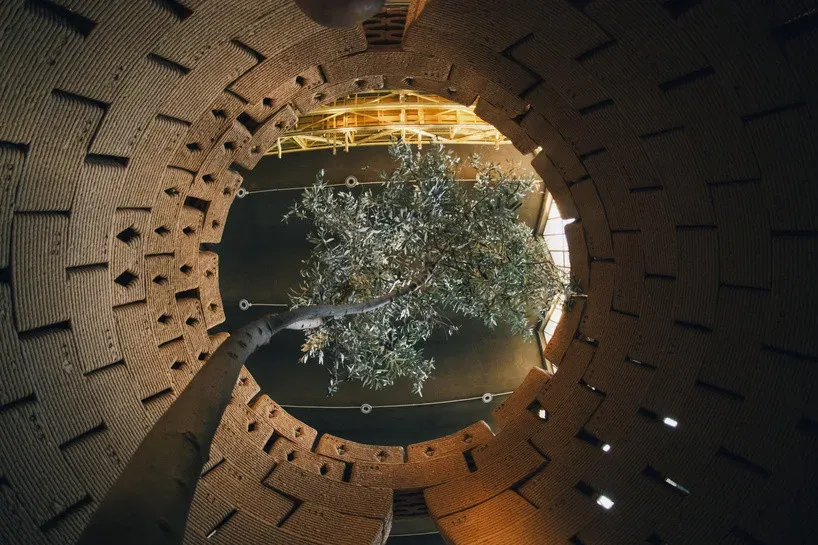
The pavilion extends MTRL’s earlier research into soil-based shelters tailored to trees. That research combines material testing, design tools and robotic fabrication; BUSTAN brings the idea to the scale of an inhabitable installation. Its environmental benefits remain subjects for research, rather than established results for ordinary buildings.
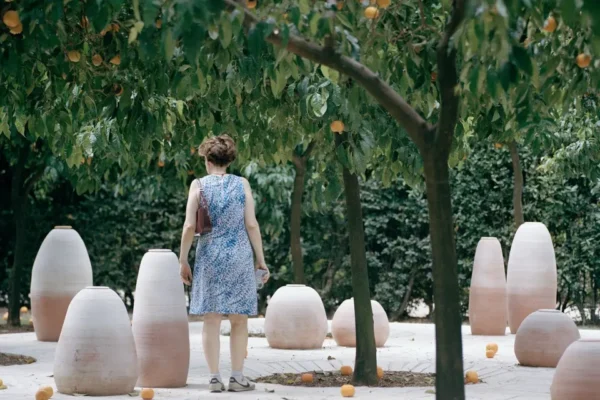
Shown within the museum’s exhibition The Circle, the work gives visitors a close view of architecture assembled from local matter. Edo Asoulin’s photographs record the completed installation and its fabrication. The interest is in how a modest unit, repeated with differences, can become a larger shelter around something already alive.
Sources and image origin: Design Museum Holon, MTRL’s research, designboom and FreeYork’s photographic gallery.