Alexey Danilin Splits a Ceramic Form to Shape Hope’s Light
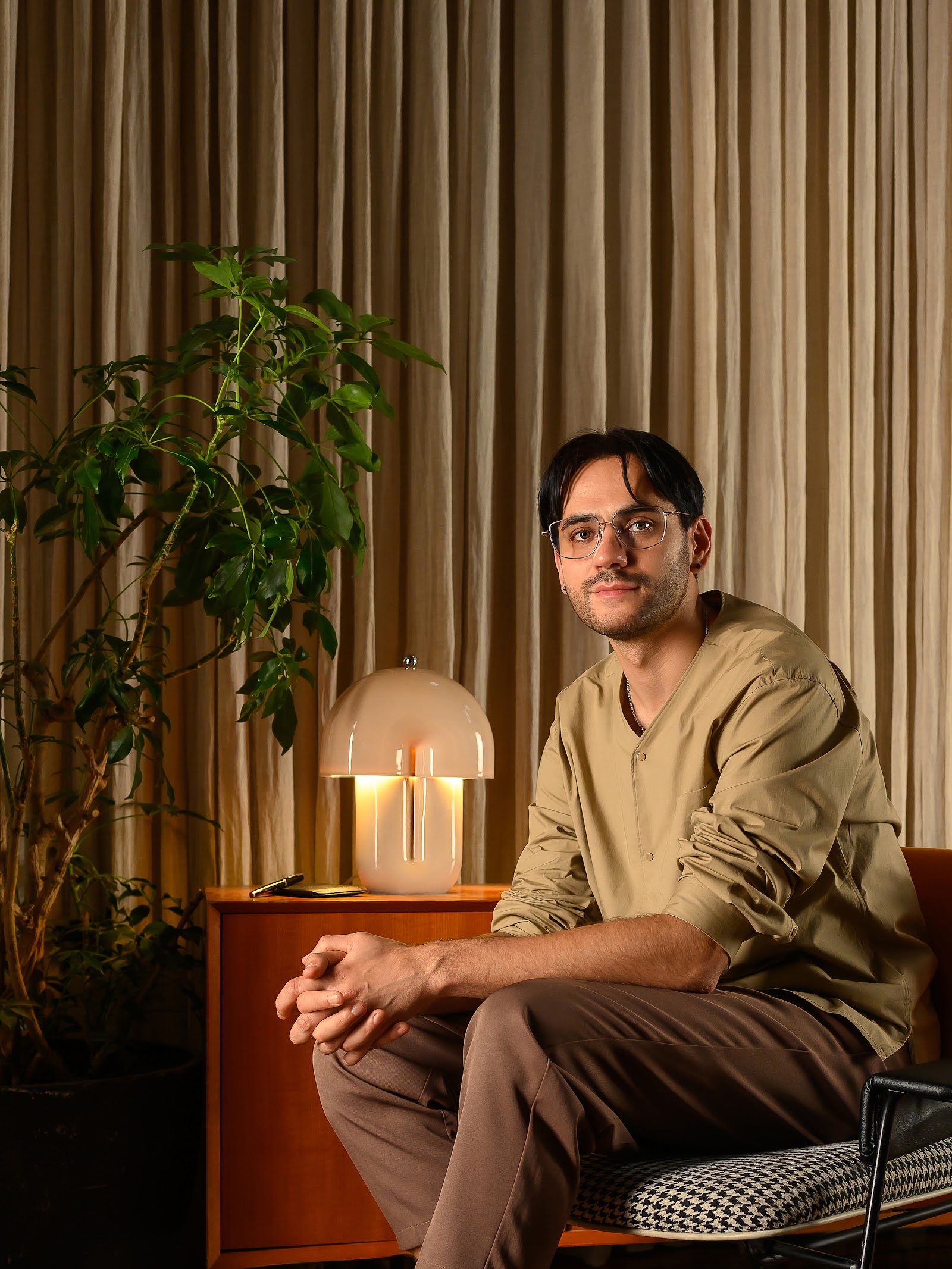
Hope, a table lamp designed by Alexey Danilin for Maytoni, makes the ceramic body do more than support a light source. Two curved parts form a compact enclosure around concealed LEDs. A narrow separation between them allows illumination to emerge while keeping the technical components largely out of sight.
The result is an object whose appearance changes when it is switched on. Unlit, its rounded outline reads as a small ceramic sculpture. Once illuminated, light reveals the space between its parts and picks out their curved surfaces. The gap becomes as important to the design as the solid material around it.
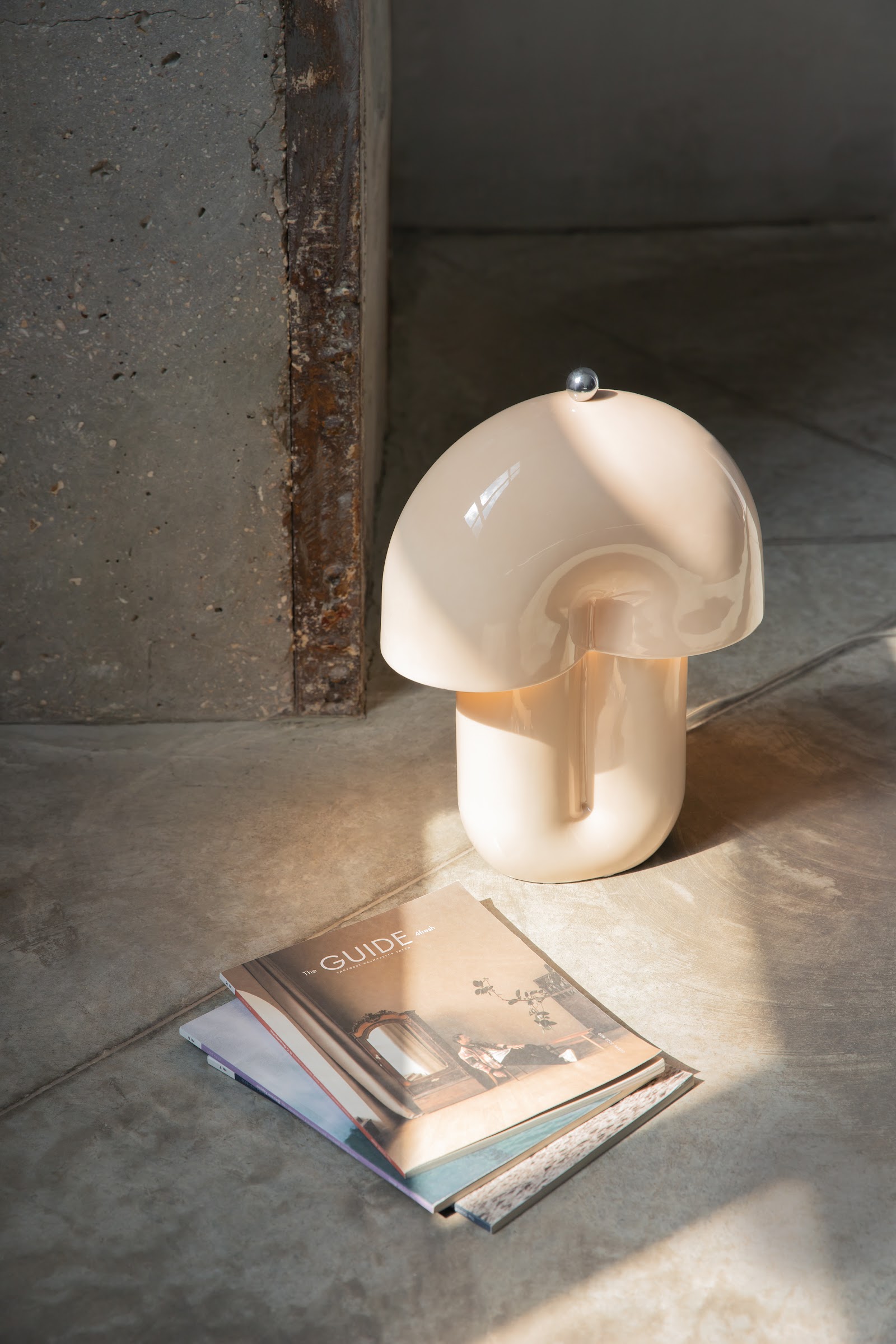
Danilin traces the form to ancient pottery and classical sculpture. That reference is expressed through the continuous profile and the material’s tactile character. There is no separate fabric shade: the ceramic envelope provides the lamp’s visual identity and helps shape the experience of its light.
The control is a small metal sphere at the top. Touching it operates the lamp and adjusts its brightness, bringing the point of interaction into the silhouette rather than adding a separate visible switch. Interchangeable metallic finishes let the user alter this small accent without replacing the ceramic body.
Maytoni lists the white model, MOD479TL-L14W3K, at 355 millimetres high, 260 millimetres wide and 136 millimetres deep. It has a 14-watt integrated LED source with a warm 3000 K colour temperature and is specified for indoor use. The manufacturer describes a recessed matt diffuser that helps soften the illumination beneath the shade.
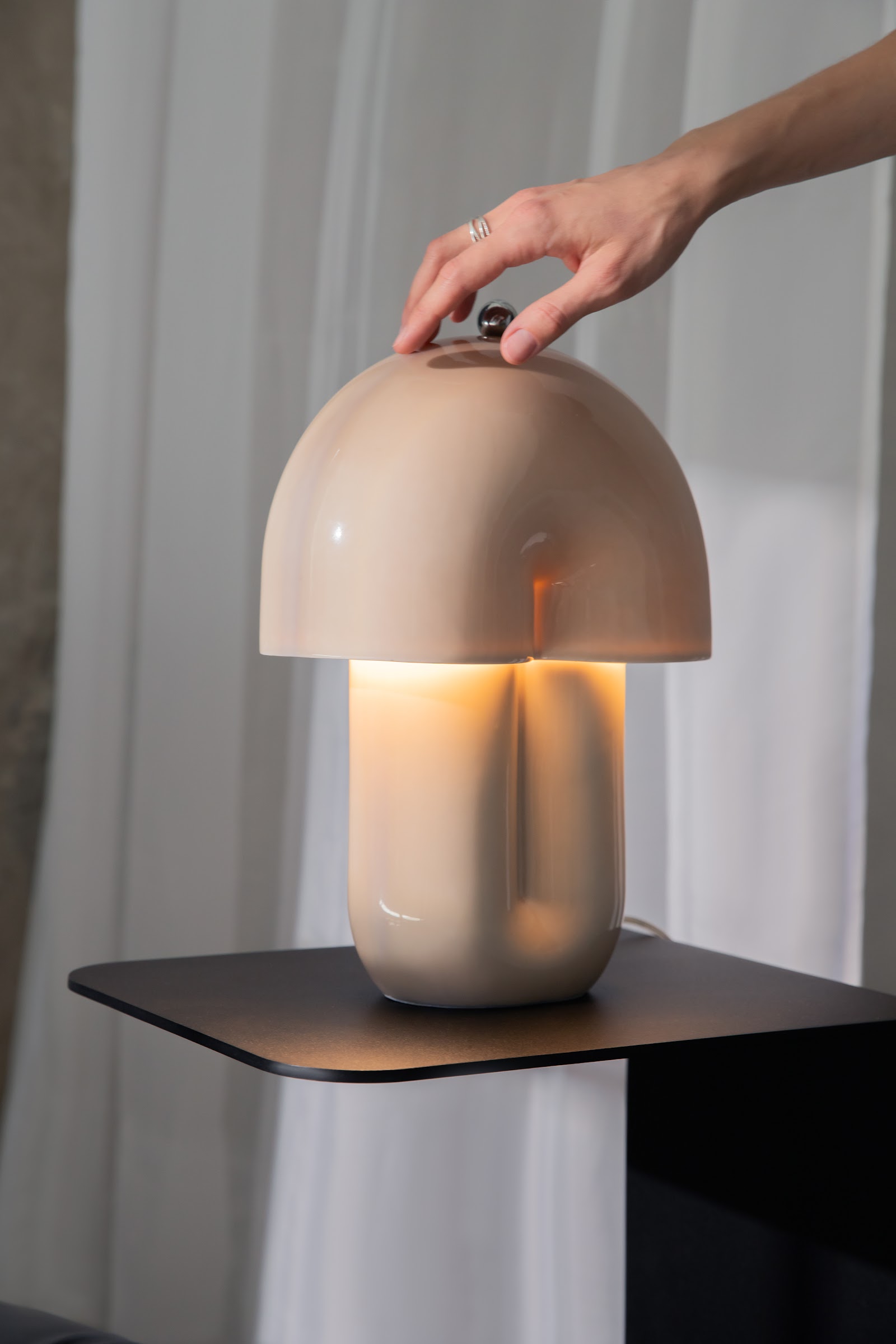
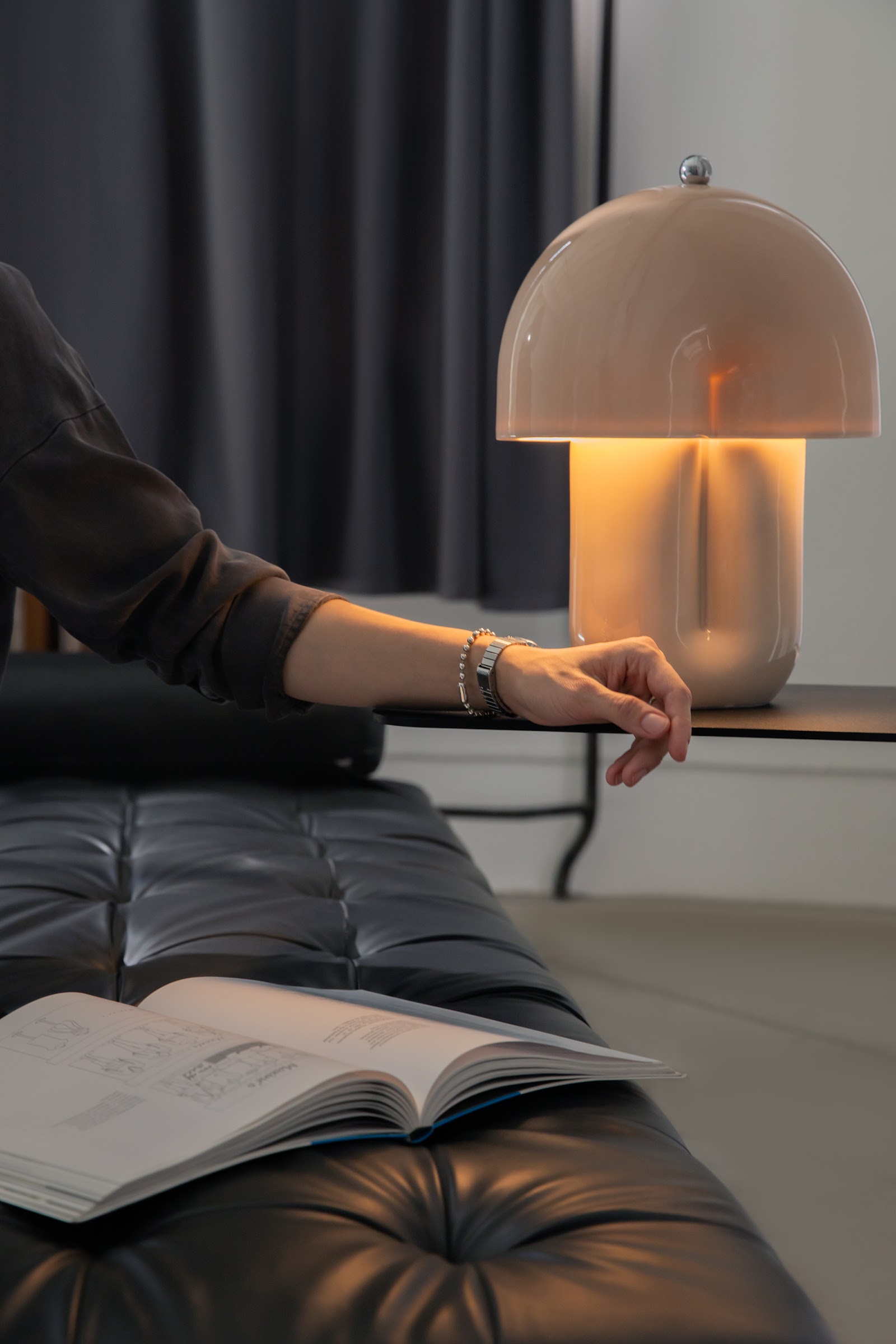
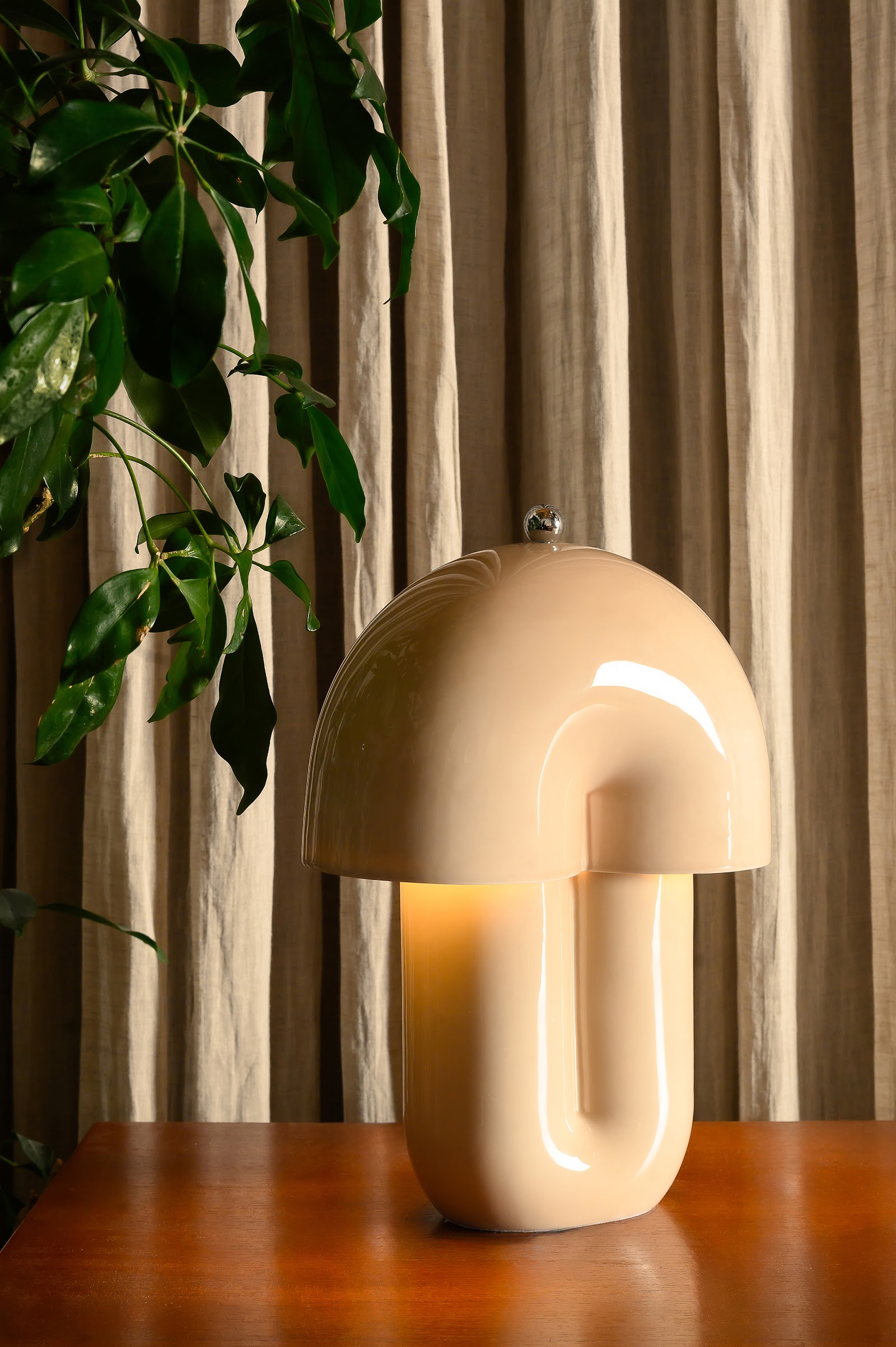
Those proportions suggest a lamp suited to a bedside surface, console or small table, where its depth matters as much as its height. Dimming allows the same object to contribute a stronger pool of light or a quieter evening glow. Its value within an interior comes from that relationship between a contained physical presence and an adjustable luminous effect.
Hope belongs to Danilin’s earlier product work: the project documentation records development in 2025, while designboom featured it on 24 October 2026. It is presented here as a design study rather than a newly launched 2026 product.
The central idea is straightforward: a familiar ceramic object becomes a lighting instrument through the careful placement of a source, a gap and a control. The technical elements remain discreet, but their position determines how the object is used and understood.
Design by Alexey Danilin for Maytoni. Images sourced from the designer’s Hope portfolio; individual photographer credits are not identified alongside that selection.