OXMAN Grows Colour into Knitted Silk with VIGILS
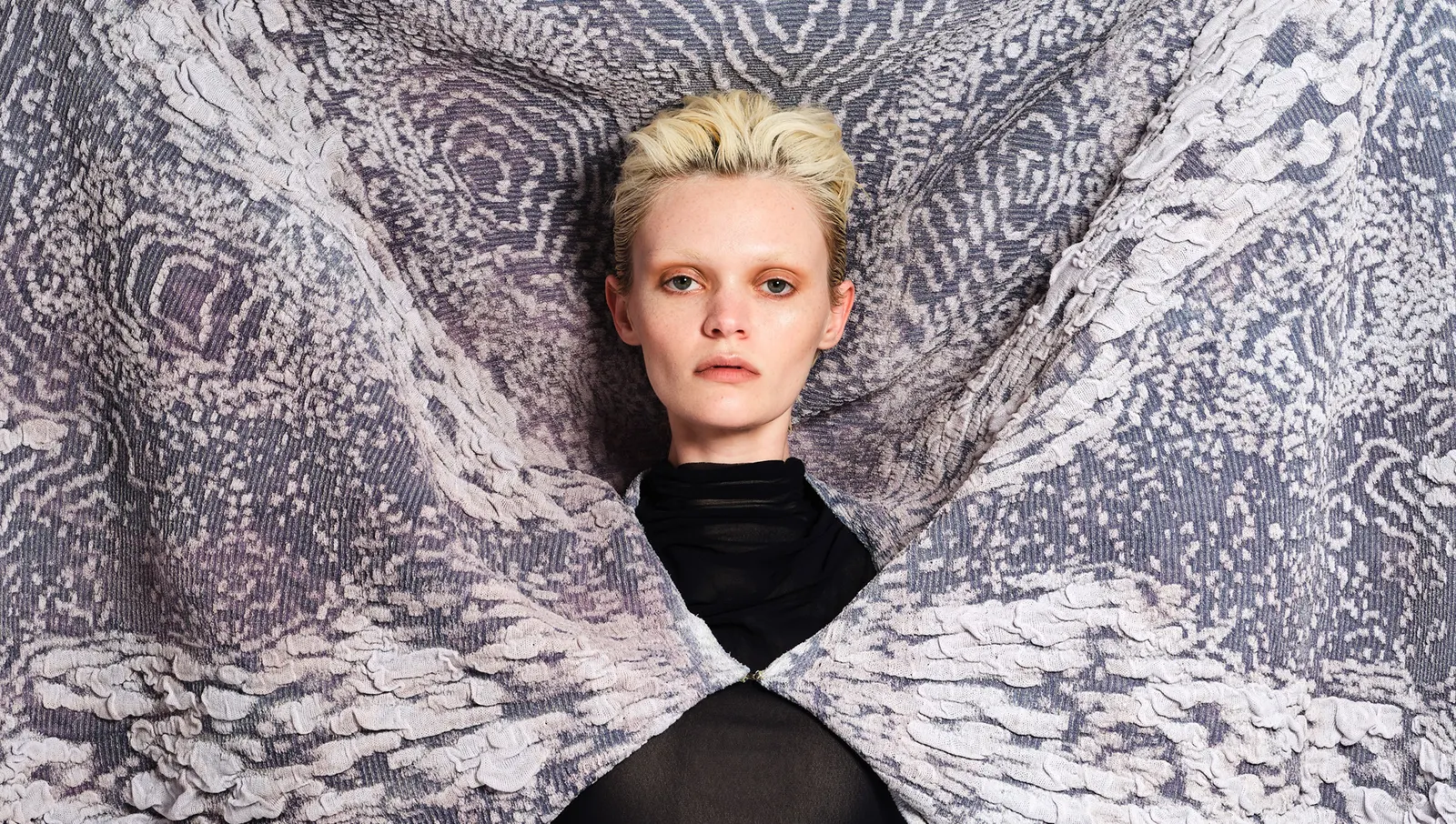
VIGILS, an experimental project by New York-based design and science studio OXMAN, brings biological pigment production into textile design. Instead of treating colour as a separate finish, the research combines engineered bacteria with knitted silk so that pattern develops through the interaction of organisms, fibres and a controlled growth process.
The project was publicly reported by June 2026. It remains a research platform and a series of garments, rather than an established industrial dyeing system. That distinction is central to understanding the work: VIGILS demonstrates a design possibility without proving that it can replace conventional textile production at commercial scale.
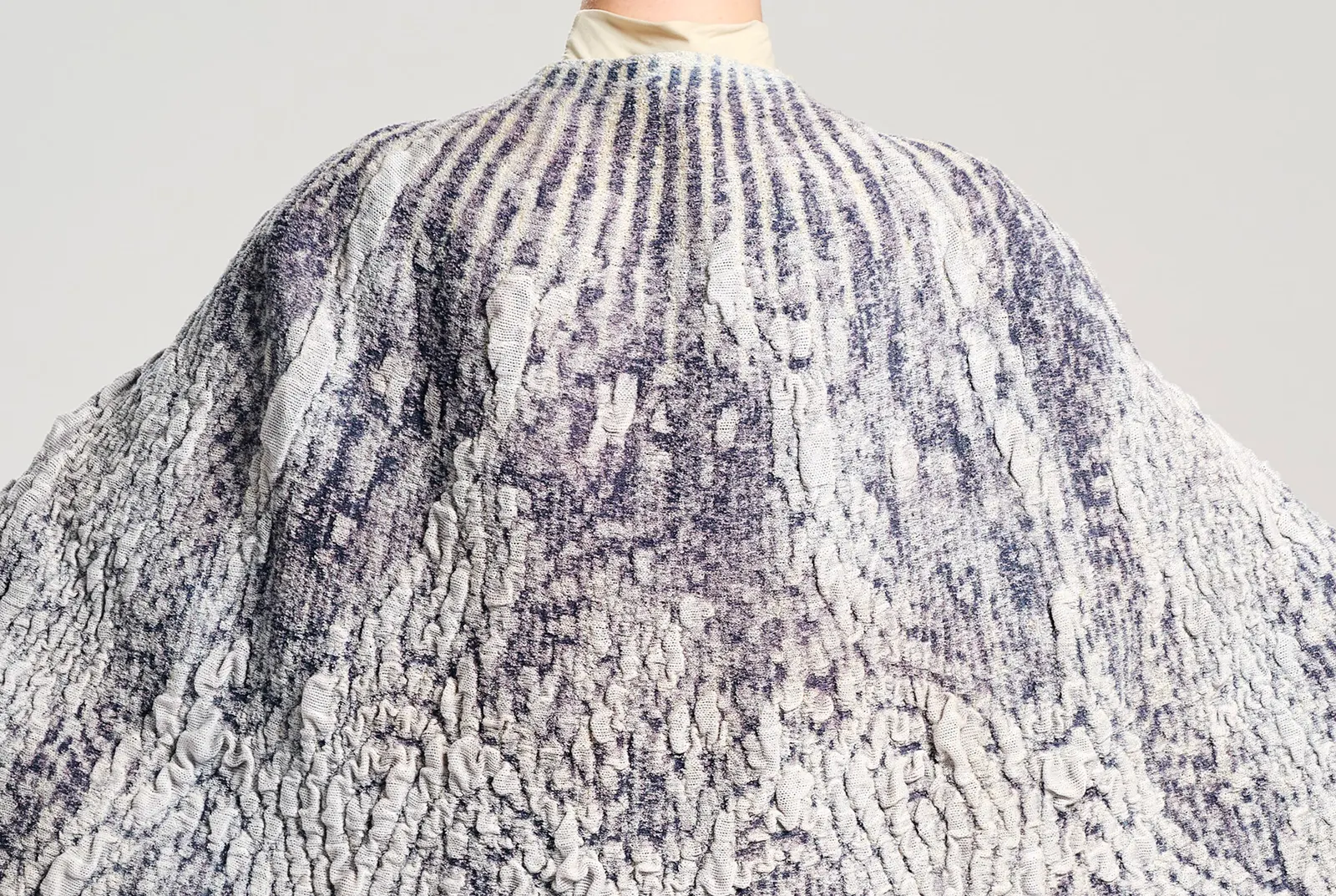
OXMAN uses engineered Escherichia coli to produce pigment classes including indigos and melanins. The textile is knitted in three dimensions, with particular fibres carrying chemical signals that influence where pigmentation develops. The arrangement of the material therefore helps guide the visible outcome.
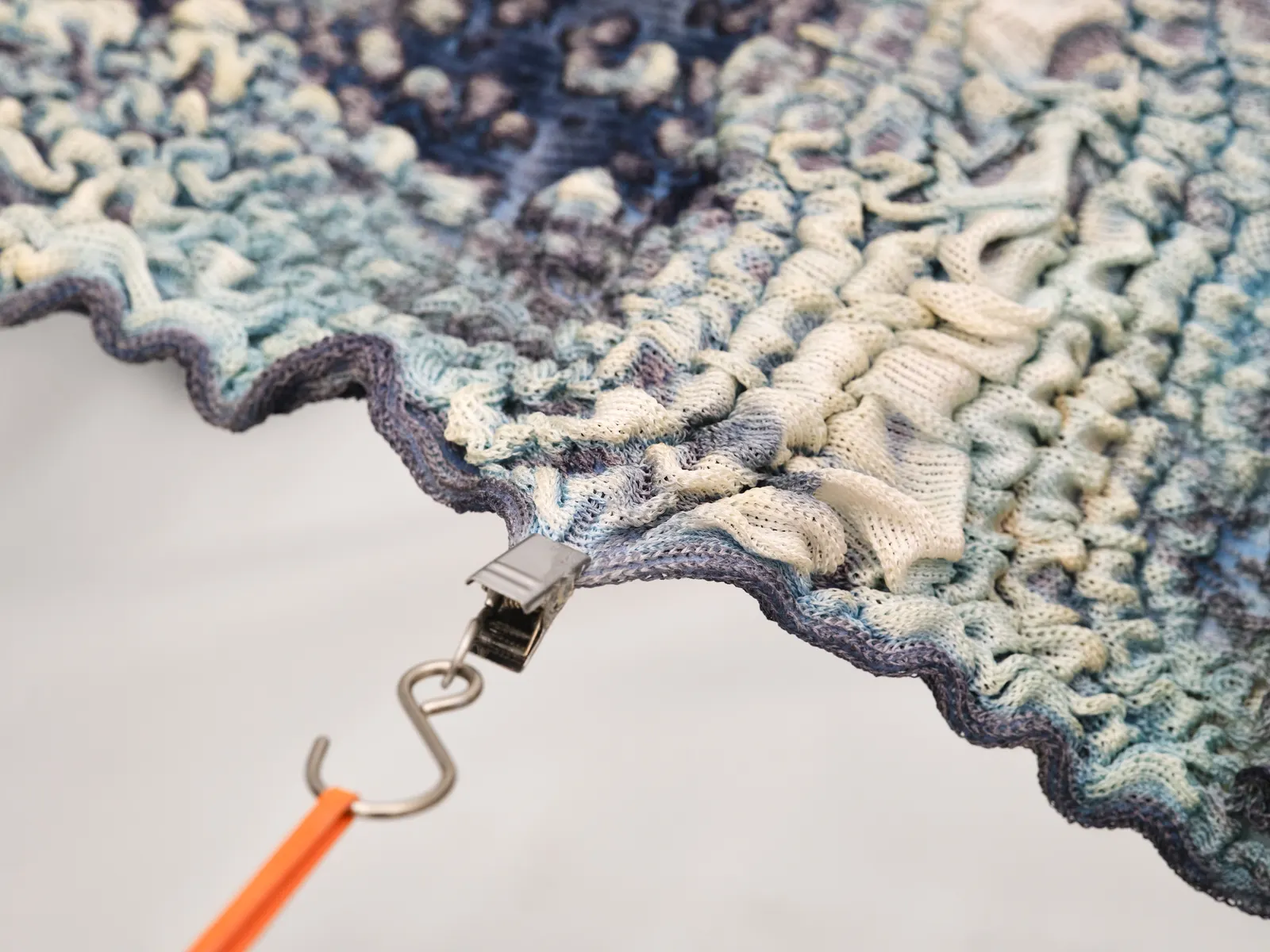
The resulting capes make this process tangible. Their ridges and valleys affect the distribution of colour, connecting surface pattern with the textile’s physical organisation. The studio describes the living stage as complete before a garment is worn; the finished cloth records the process rather than requiring the wearer to maintain an active bacterial culture.
For design, the important shift is from choosing a pattern and printing it onto a neutral surface to composing conditions through which a pattern emerges. This changes what a designer must control. The brief includes material structure, biological response and the tolerances of the process, as well as appearance.
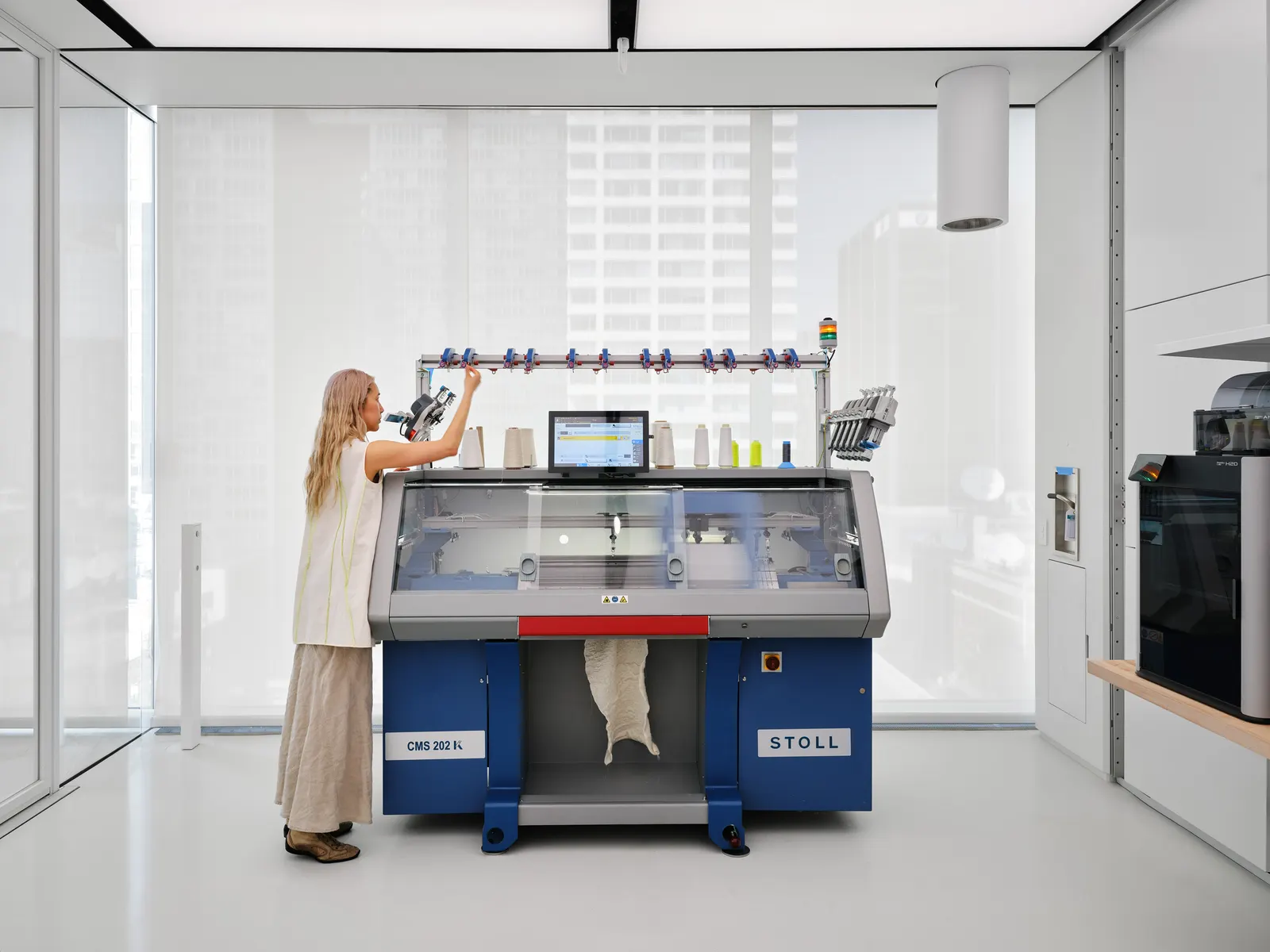
The knitting is equally significant. A continuous textile can be shaped through programmed stitches, integrating form into fabrication. In VIGILS, that physical geometry becomes part of the pigmentation system. The colour cannot be fully understood as an image detached from the cloth that carries it.
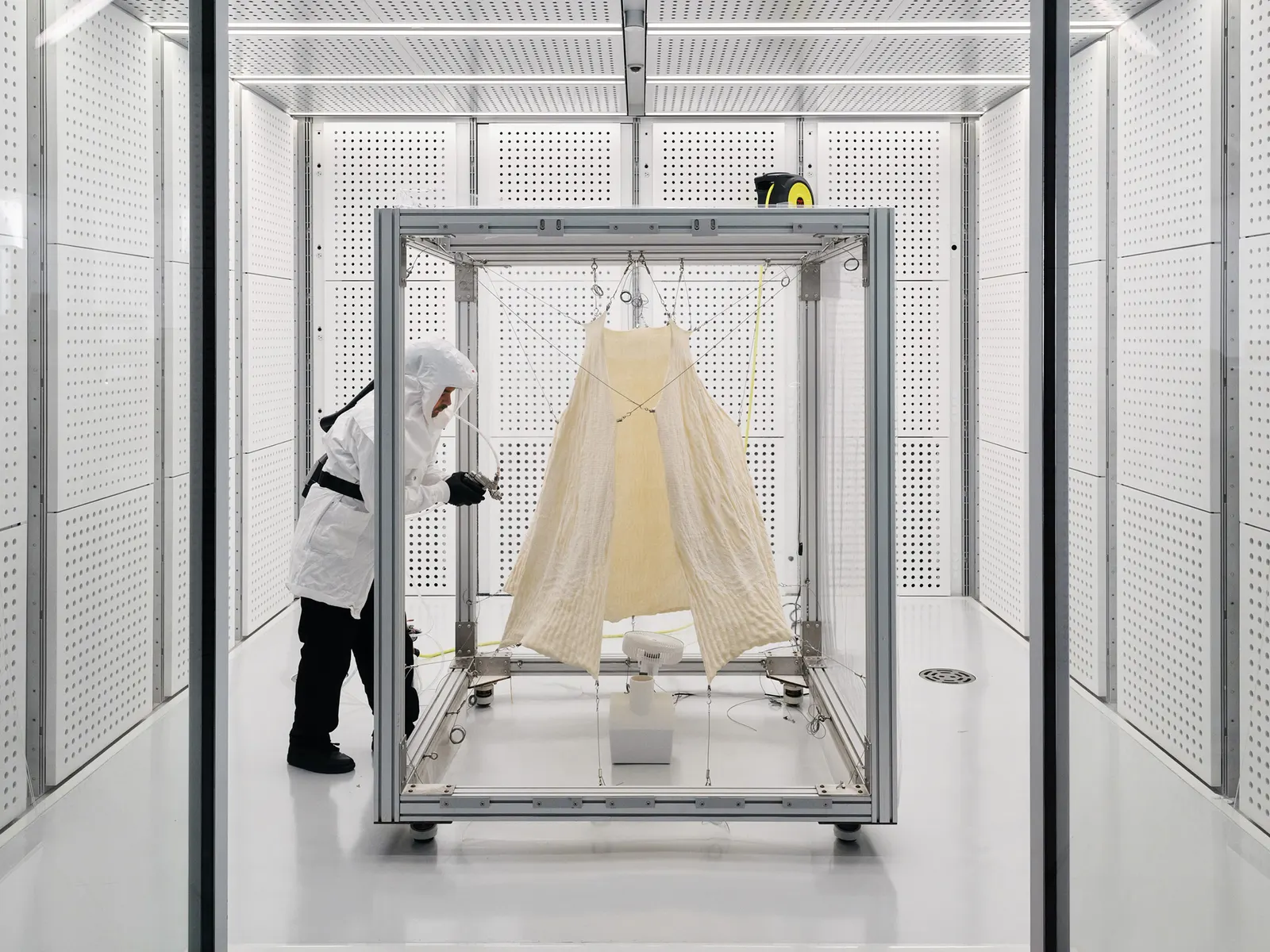
Process photographs document laboratory application, textile fabrication and the surface after incubation. They are useful because they connect the finished garments with the equipment and intermediate stages required to produce them. The visual effect is striking, but the project is stronger when those steps remain visible.
Environmental claims need to remain proportionate to the evidence. A biological route to colour raises worthwhile questions about feedstocks, processing and waste, but its overall performance would require project-specific assessment. This article makes no claim of measured carbon savings, industrial readiness or proven superiority over established dyeing methods.
VIGILS belongs in a discussion of technology through its material consequences. It asks what happens when the design of an object includes the behaviour of a living production system. The immediate result is a textile experiment; the broader value is a concrete way to examine how computation, biology and fabrication might share responsibility for form.
Project information: OXMAN. Images originate from OXMAN’s project gallery. Images from OXMAN. Project photography credits: Nicholas Calcott and Kristina Sumfleth; individual process images are not separately assigned.