
Violet Turns Flowers into Pixelated Images through Optical Glass
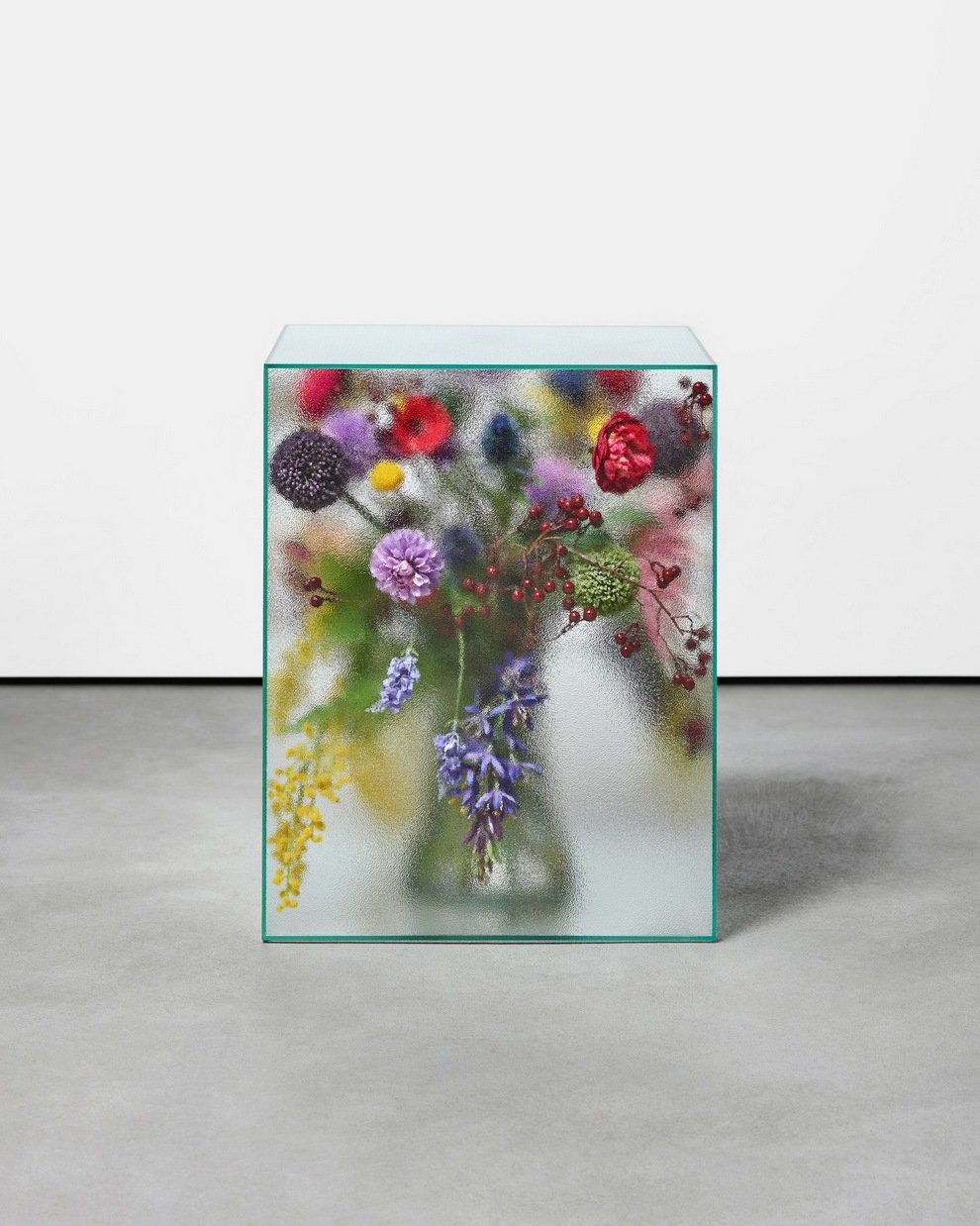
Violet is a compact study in how a physical object can behave like an image. Dutch artist and designer Marius Boekhorst placed a bouquet inside a case of patterned optical glass, allowing the flowers to remain materially present while their colour and outline fragment into a grid of luminous cells. The sculpture dates from 2023 and was shown in Boekhorst’s solo exhibition at ECC Contemporary in Chieri, Italy, from 4 to 31 May 2026.
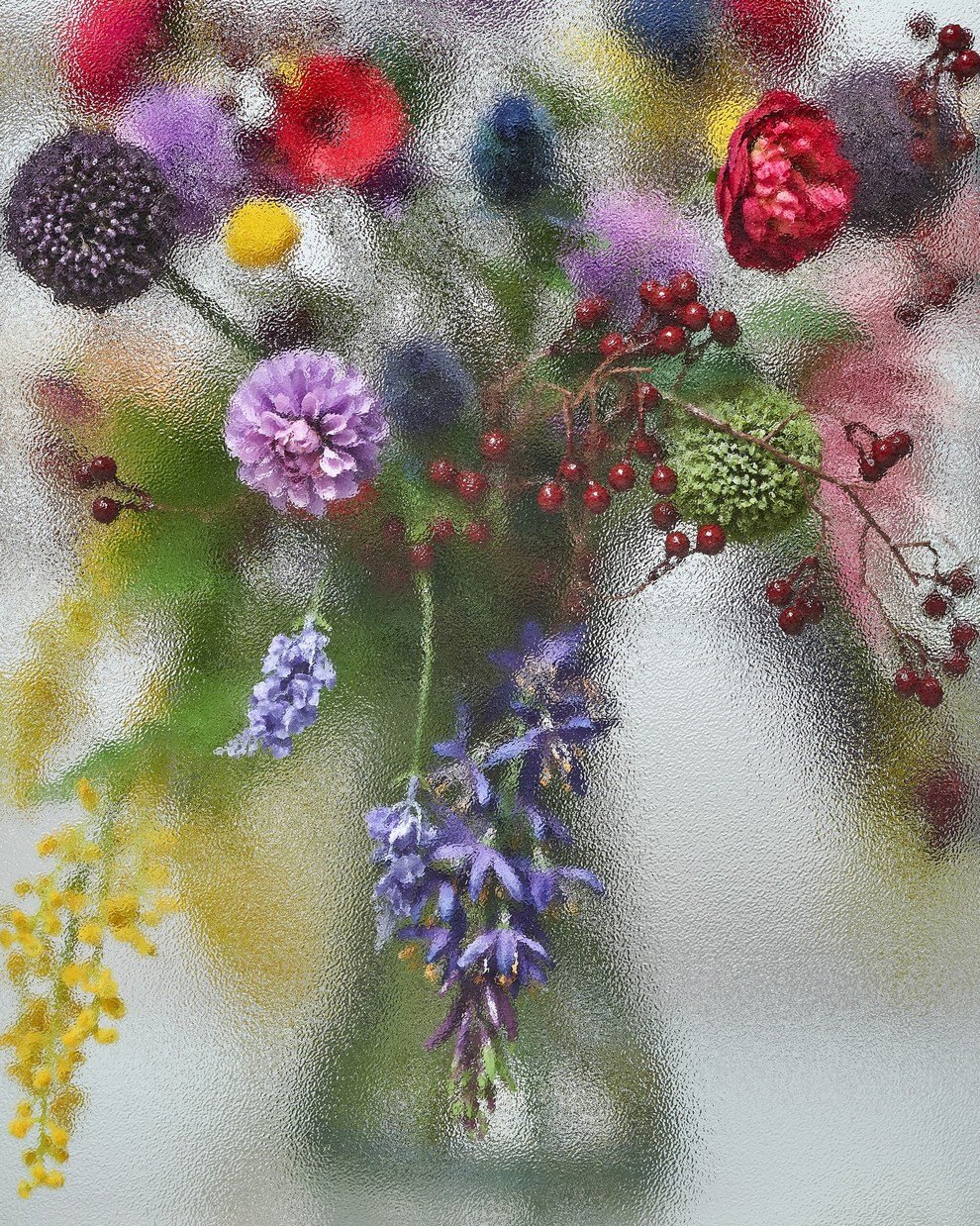
The work depends on separation. The flowers sit behind the glass rather than being printed onto it, so the apparent pixels change with viewpoint, focus and light. At a distance, the case can resemble a low-resolution still life or a screen with no electronics. Close up, the viewer can read the thickness of the glazing, the air around the stems and the individual facets that redirect the image. Movement replaces animation: each step produces a slightly different composition.
Its optical effect recalls ribbed privacy glass, prismatic lenses and the distortion produced by old domestic glazing. Boekhorst turns that familiar behaviour into the main structure of the object. The transparent enclosure is neither a neutral vitrine nor a conventional frame. It edits what it contains, making the boundary between display and artwork difficult to locate.
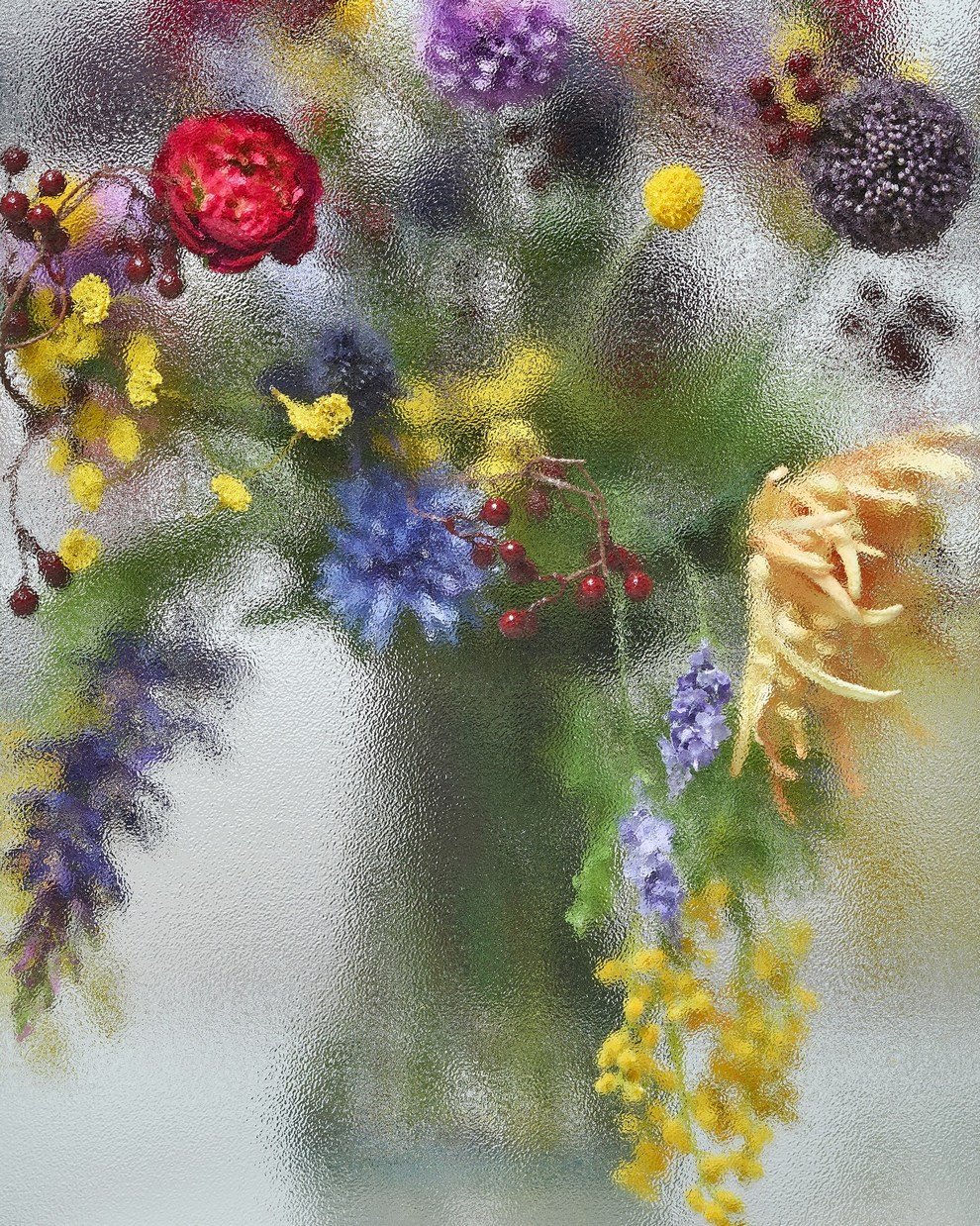
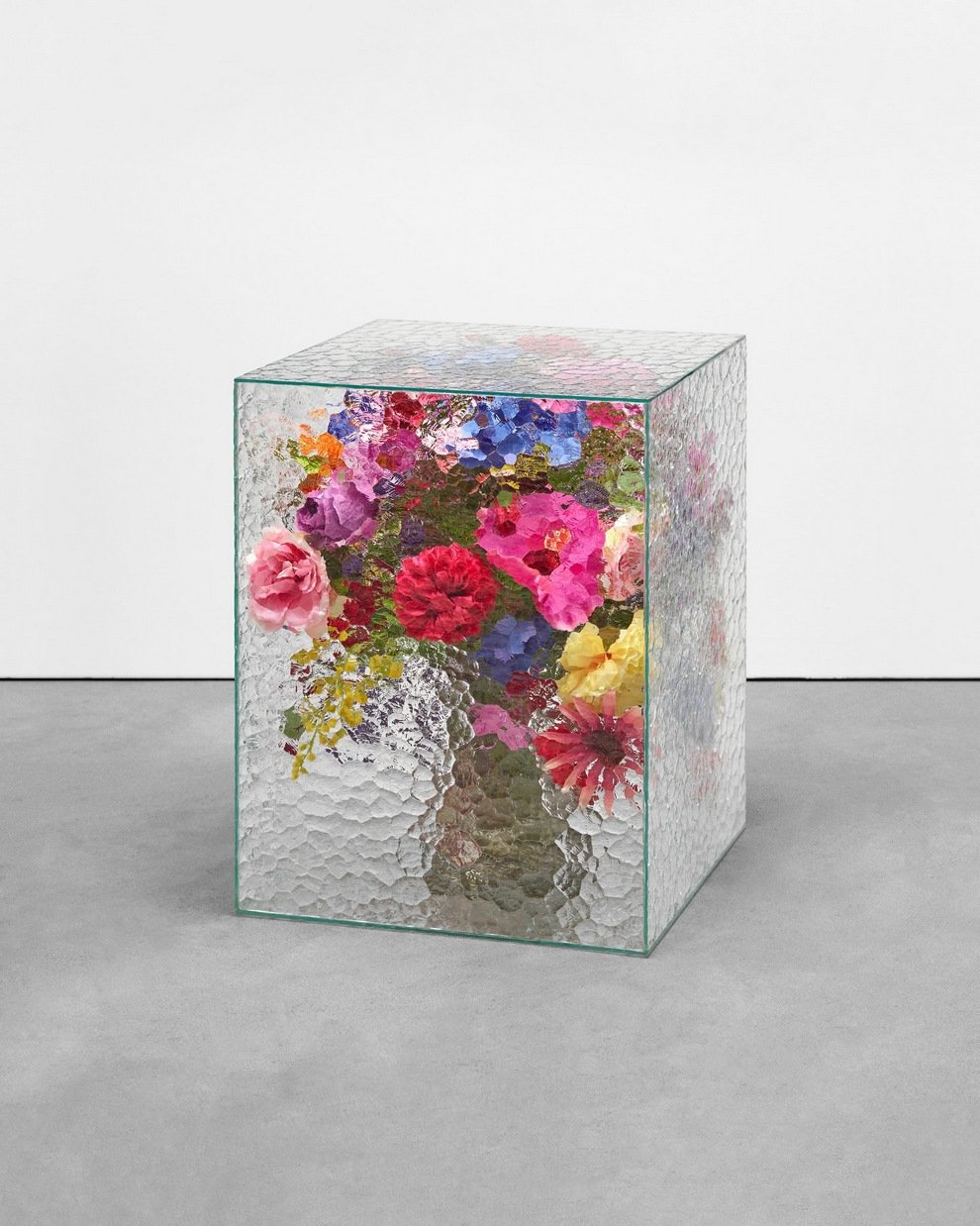
Because the bouquet is organic, the image is also time-based in a slower sense. Colour, density and posture change as the flowers age, while the glass continually translates those changes into another visual register. The sculpture therefore holds together two kinds of precision: a manufactured optical surface and a perishable arrangement that cannot remain fixed.
Violet is valuable less as an illusion than as a material argument. It shows that pixelation, filtering and image instability are not exclusive to digital media. Glass, depth and the viewer’s body can produce them directly. The work asks for repeated looking because no single photograph can fully describe how its surface and contents align in space.
Artwork by Marius Boekhorst. Exhibition information: ECC Contemporary; image gallery and reporting: Design You Trust. Images courtesy Marius Boekhorst and ECC Contemporary.