BETWEEN Links Bratislava’s Winter Harbour Through a Public Landscape
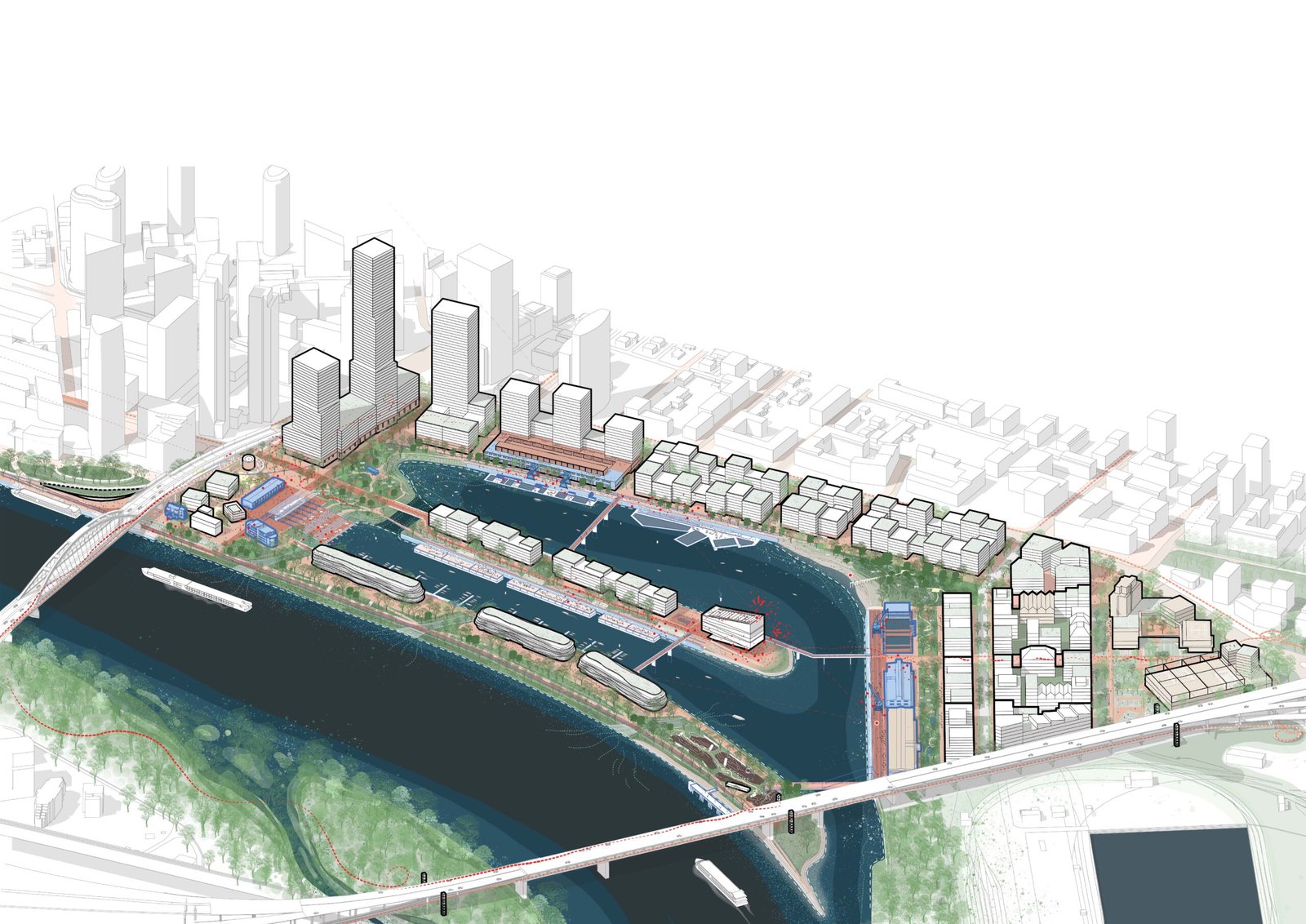
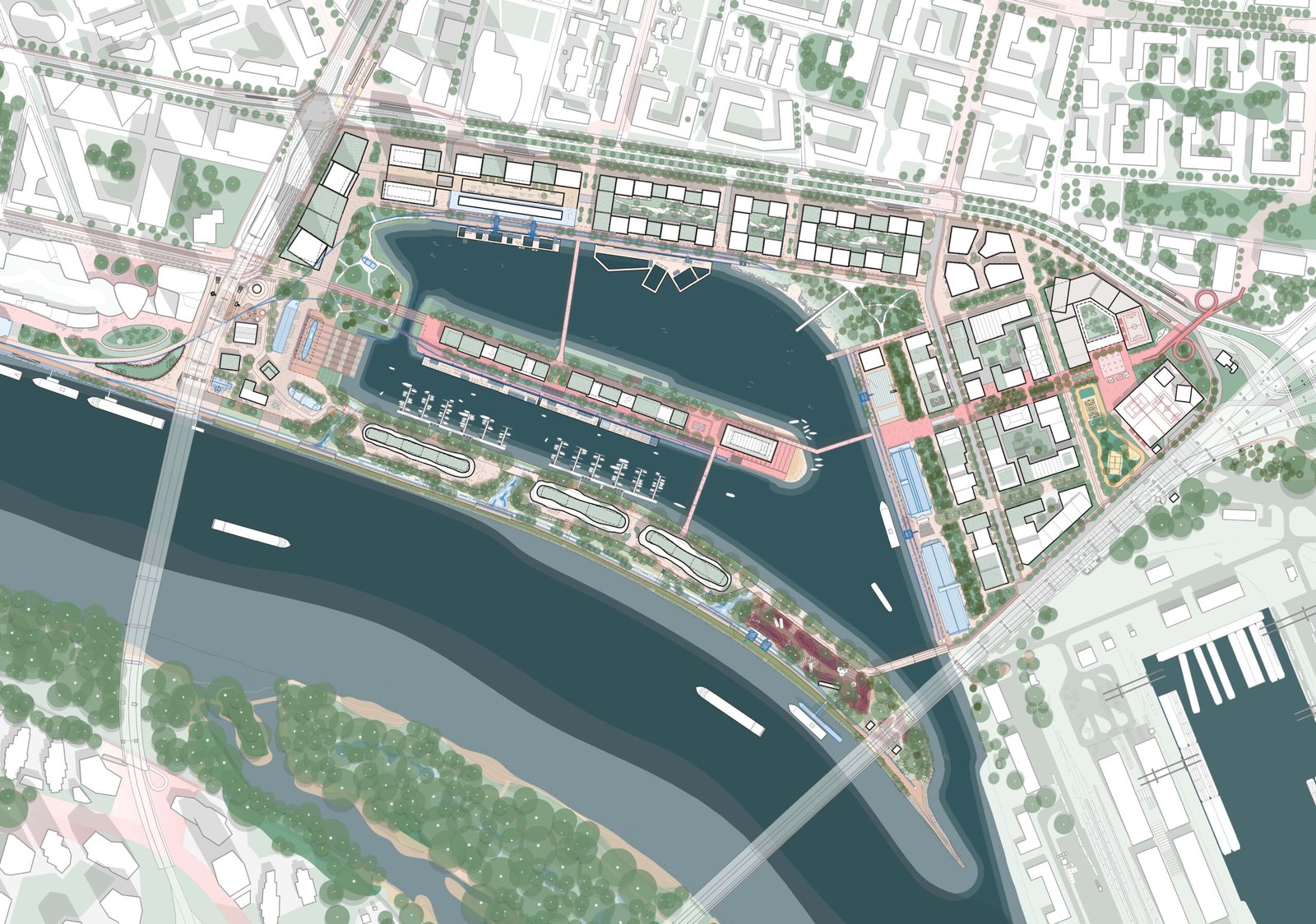
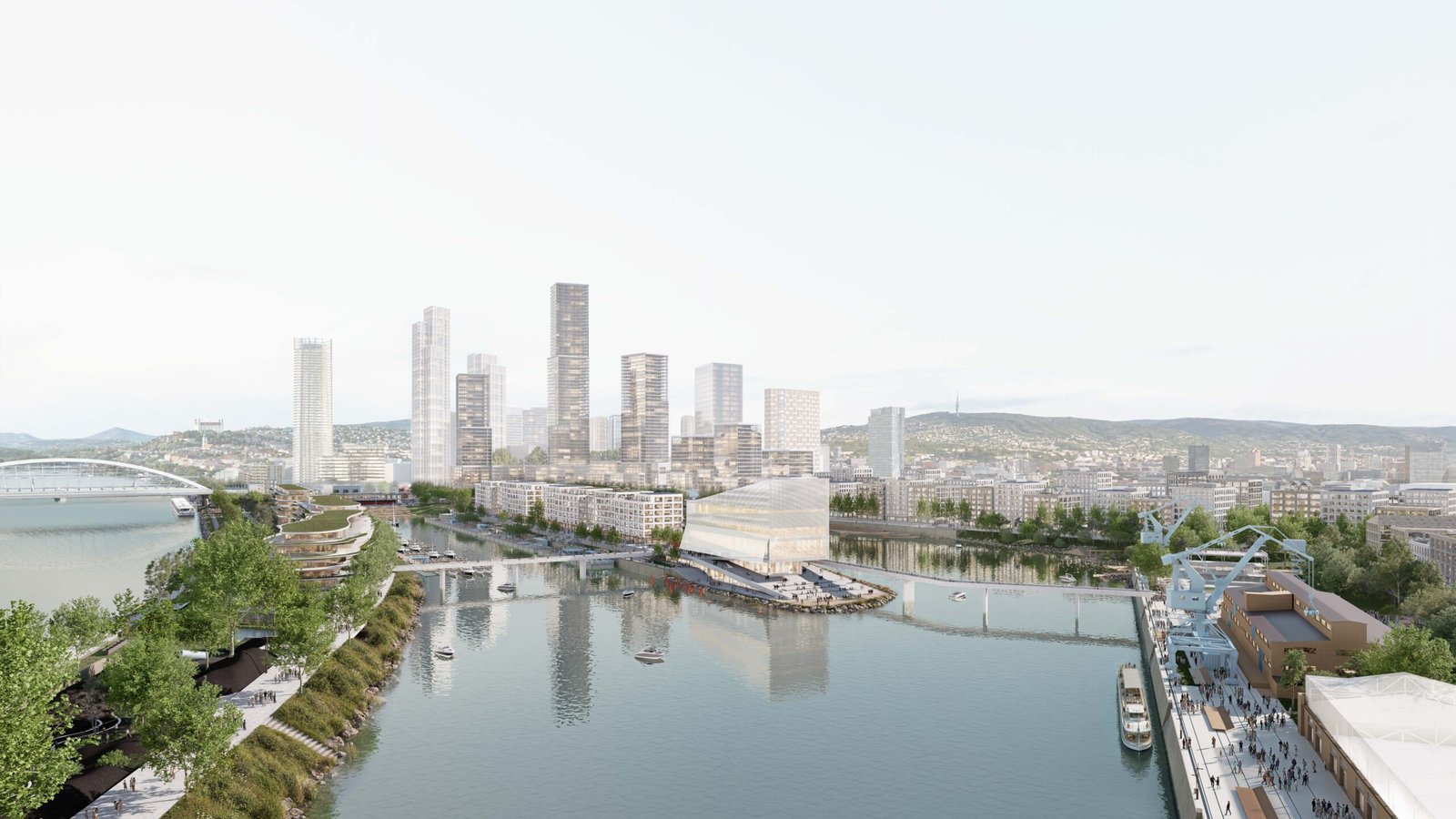
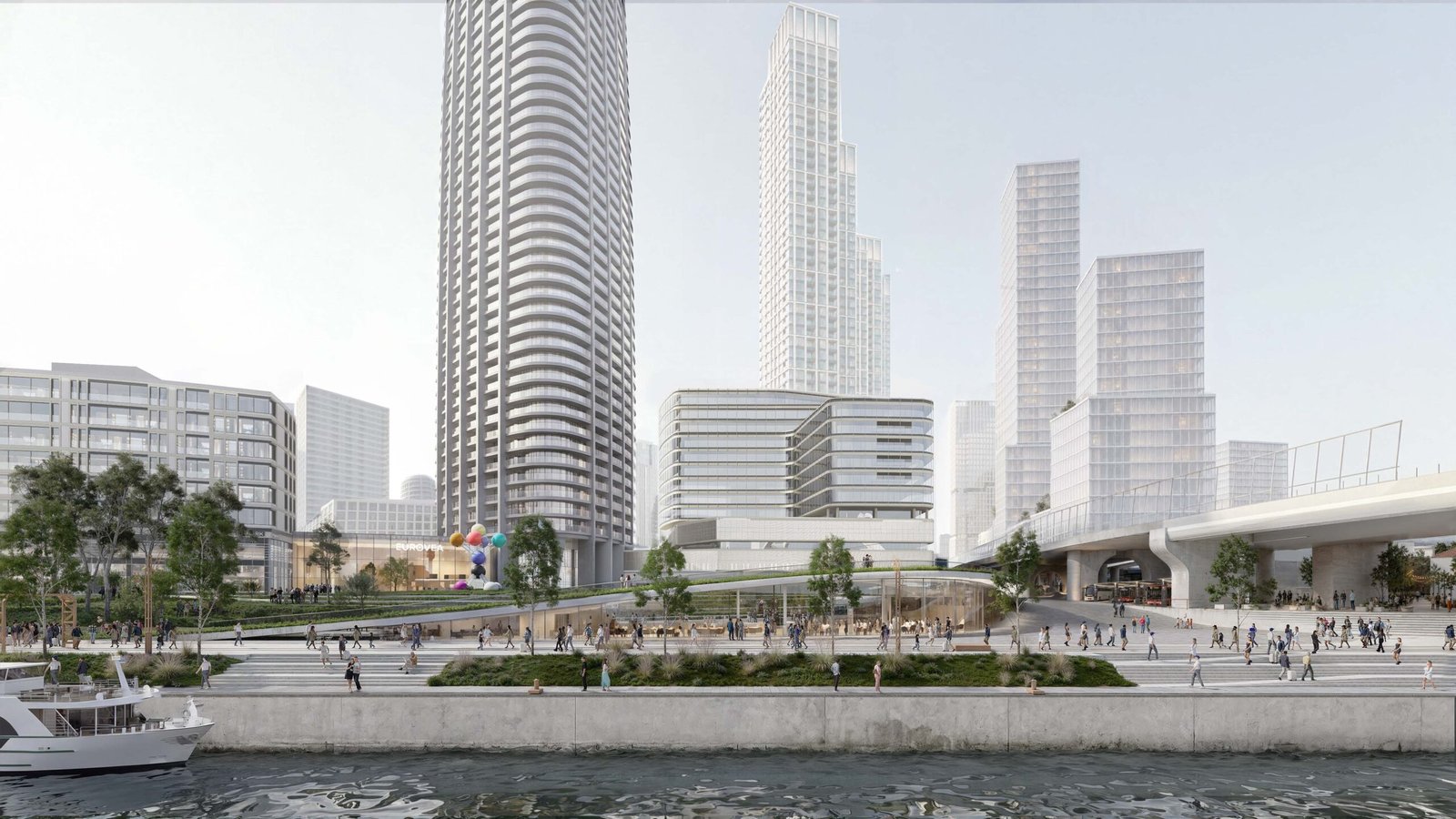
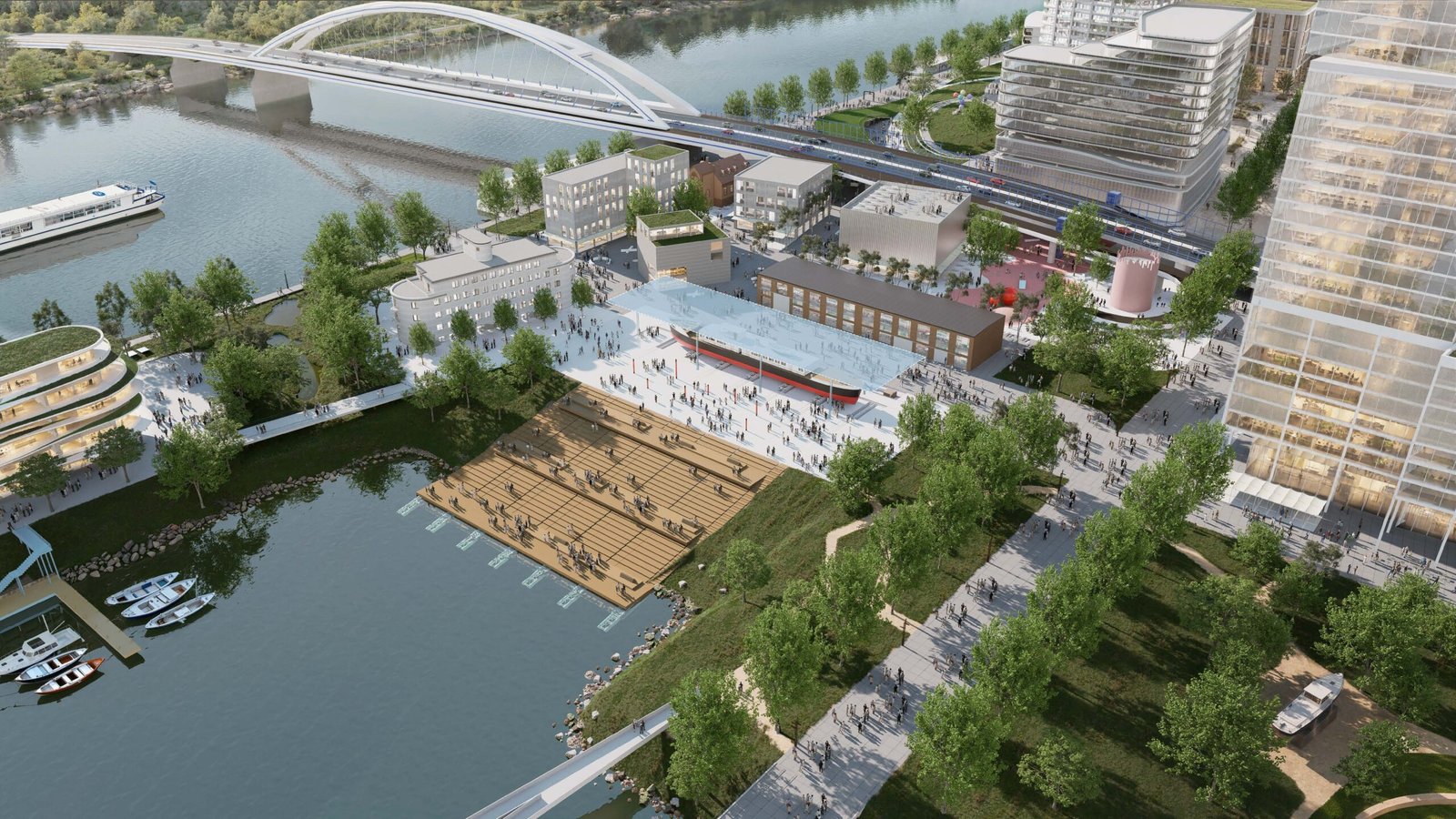
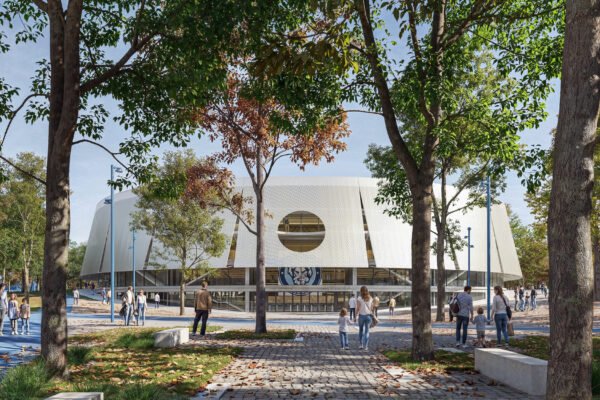
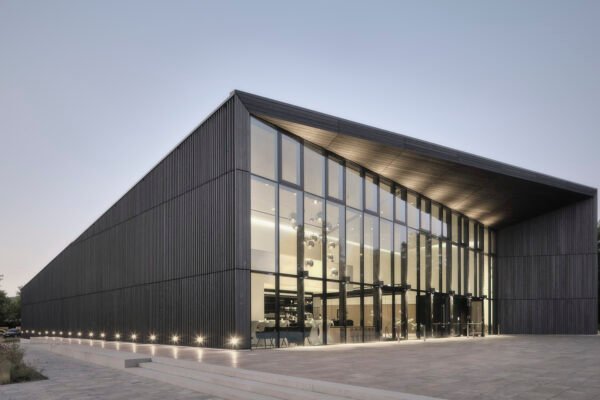
BETWEEN’s proposal for Bratislava’s Winter Harbour placed joint fourth in the 2026 international competition, alongside the entry by Dietrich | Untertrifaller and AllesWirdGut. The scheme by Tomáš Haná?ek and Katarína Fejo is unbuilt, but its 65-hectare context makes it one of the most consequential urban projects in the group.The proposal treats landscape as the main connective structure. A network of streets, paths, planted basins and waterfront spaces links new neighbourhoods with retained industrial elements. Rather than clearing the harbour into a uniform district, the plan uses existing traces to organise distinct pieces of city.A continuous public landscape connects new neighbourhoods with harbour structures. Drawing courtesy of BETWEEN.Heap Park forms a central civic landscape, combining sports, play and ecological functions. At the water, a landscape pavilion incorporates the ferry terminal so infrastructure participates in public life. These moves explain the jury’s praise for the scheme’s rich programming and interconnected network of open spaces.Building blocks are arranged to frame routes and courtyards while maintaining long views towards cranes, basins and the Danube landscape. Density varies across the site rather than following one repeated type. Taller elements mark strategic points, while lower blocks hold everyday streets and sheltered public rooms.Sports, play and ecological systems share the central landscape. Image courtesy of BETWEEN.A landscape pavilion integrates the ferry terminal. Image courtesy of BETWEEN.Sections coordinate new blocks, retained industry and the waterfront. Drawing courtesy of BETWEEN.The official competition results record 123 submissions from 33 countries and seven finalists. BETWEEN did not win; Hosoya Schaefer Architects placed first. Even so, this proposal deserves attention because it demonstrates a credible alternative to object-led redevelopment: public space, water and industrial memory form the framework within which architecture can follow. Its fourth-place result is not a reason to inflate its authority, but it does make the comparison useful. Against schemes organised primarily by blocks or landmark buildings, BETWEEN begins with connected ground and programmes that can support daily use before the district is complete. That approach could also make phased construction more resilient, provided the public landscape is funded early rather than postponed until the final development stage. That sequencing question is central to the proposal’s value. If the connected ground arrives first, it can structure later parcels and give the harbour a public identity throughout construction; if it arrives last, the plan risks becoming another collection of isolated developments.