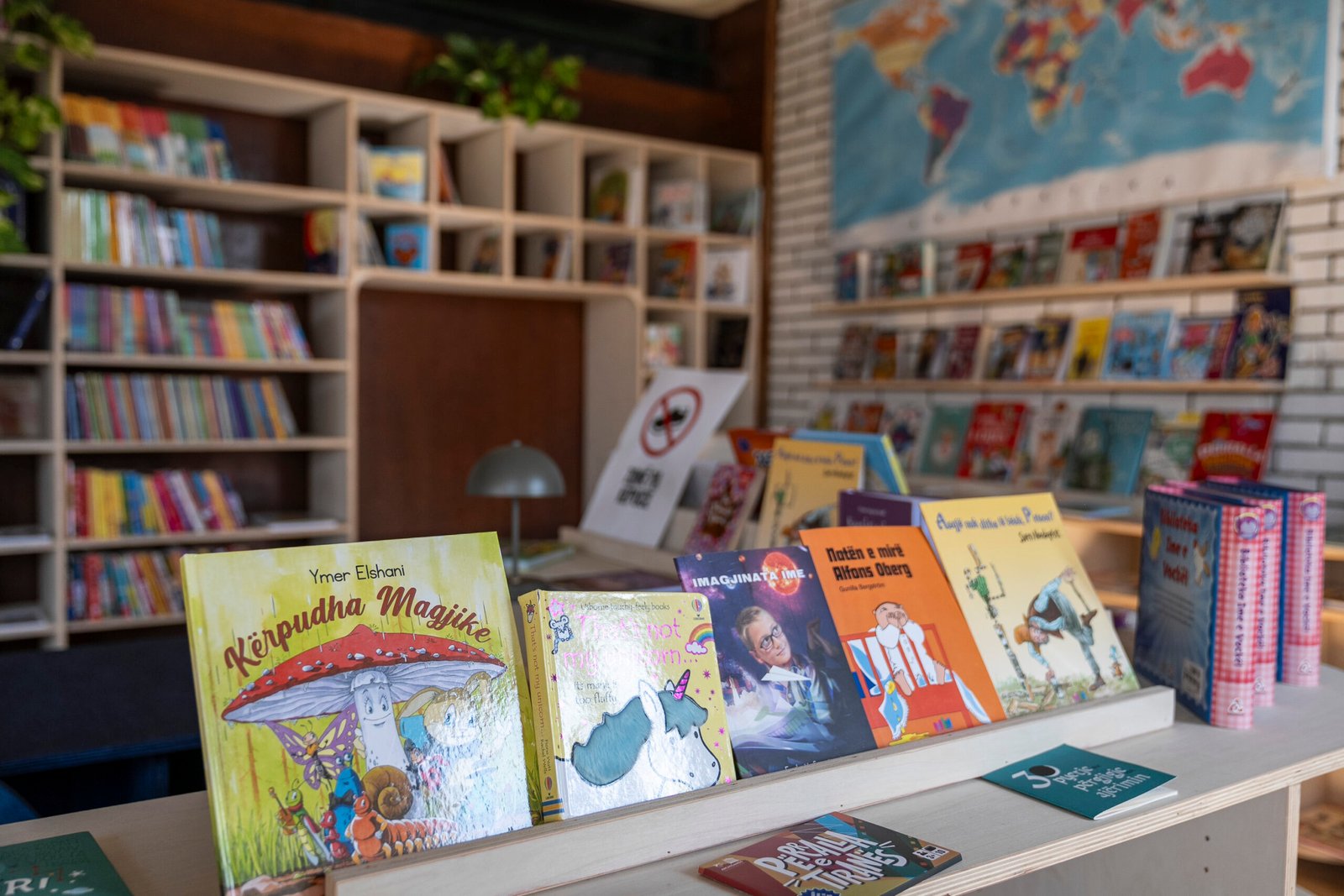
Prishtina’s Children’s Library Makes Reading a Shared Spatial Activity
Prishtina’s new Children’s Library occupies a bright room inside the Palace of Youth, adapting part of the city’s major civic complex for readers who are usually underserved by public cultural space. The library opened on 23 May 2026 after a participatory design process led by architect Drenusha Blakcori with The Library Project Kosova. Children contributed drawings, comments and priorities, then returned before opening to arrange books and furniture and see how their ideas had entered the finished interior.
The design begins at the door. Original handles echo the large structural pillars of the Palace of Youth, while a second handle has been installed within a child’s reach. That small intervention makes the institution’s priorities explicit before entering. Inside, large windows bring daylight and views across the city, and the Kosovo Philharmonic’s rehearsals can sometimes be heard from the floor below, linking the reading room to the building’s wider cultural life.
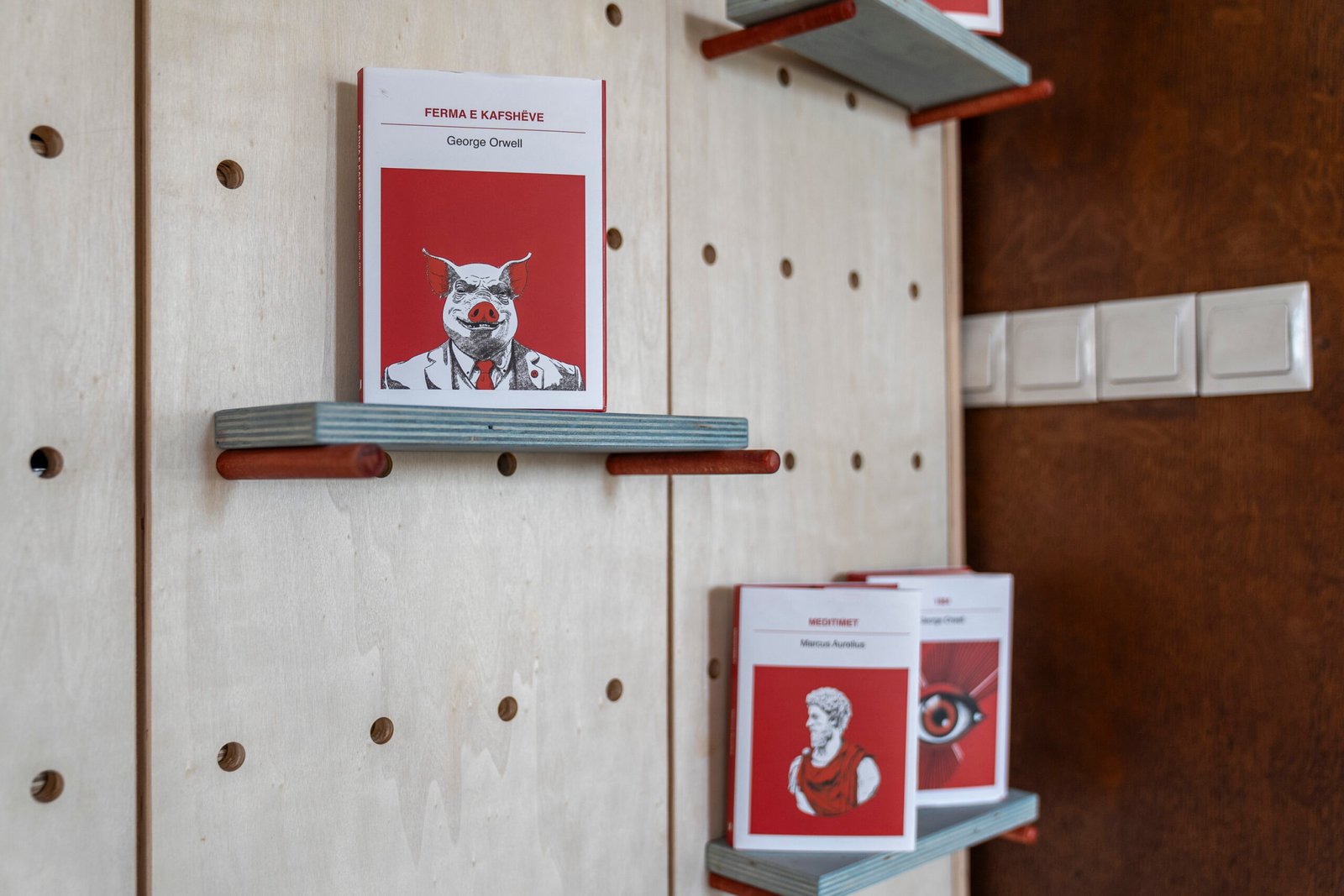
Approximately 1,500 titles are displayed on low, accessible shelves. Bespoke furniture divides the open plan into active, quiet and shared areas without fixing them as permanent rooms. Tables, stools and platforms can be moved or combined for solitary reading, small groups, storytelling sessions and entire school classes. Books remain visible at children’s eye level, and generous circulation lets movement, browsing and social learning happen together.
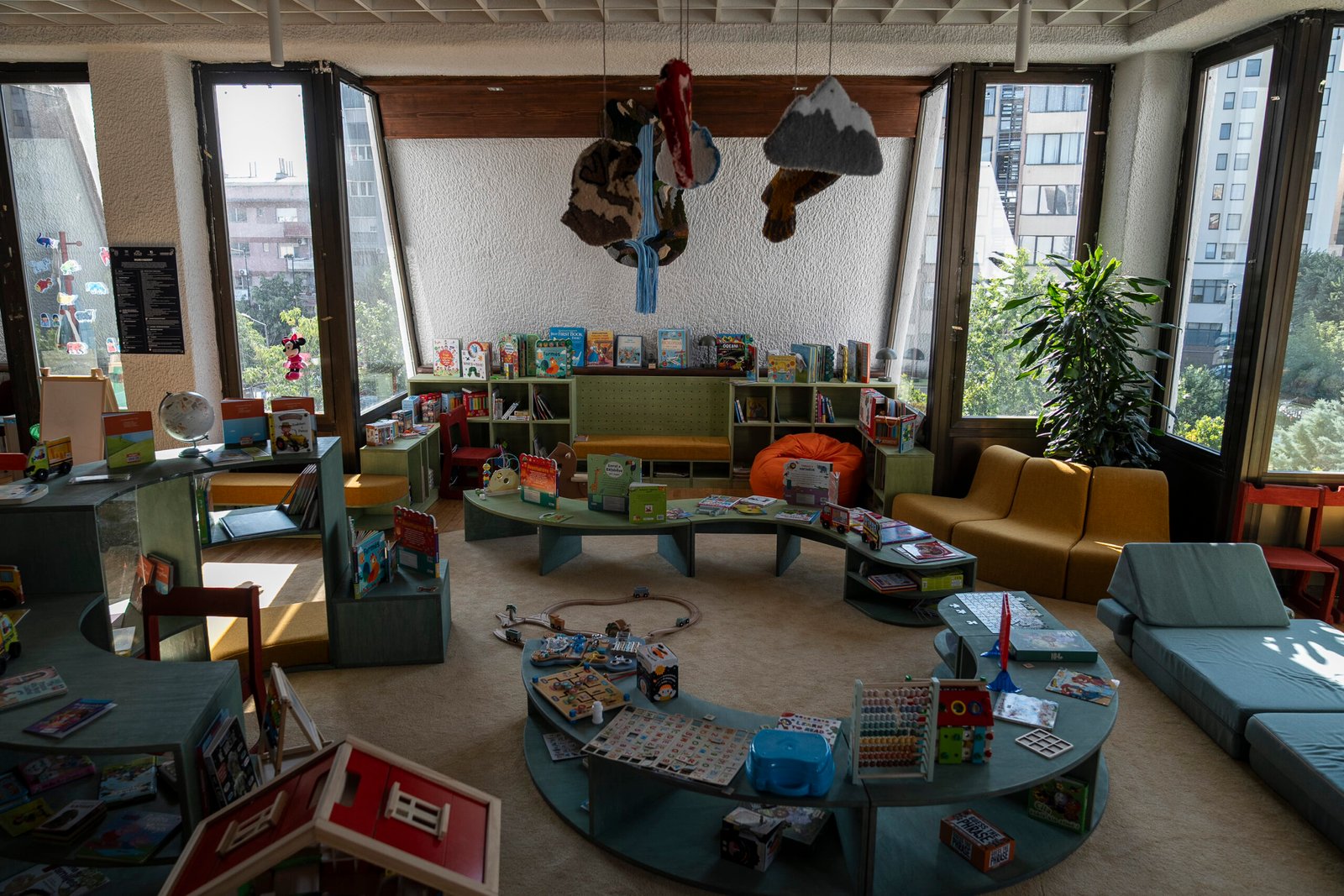
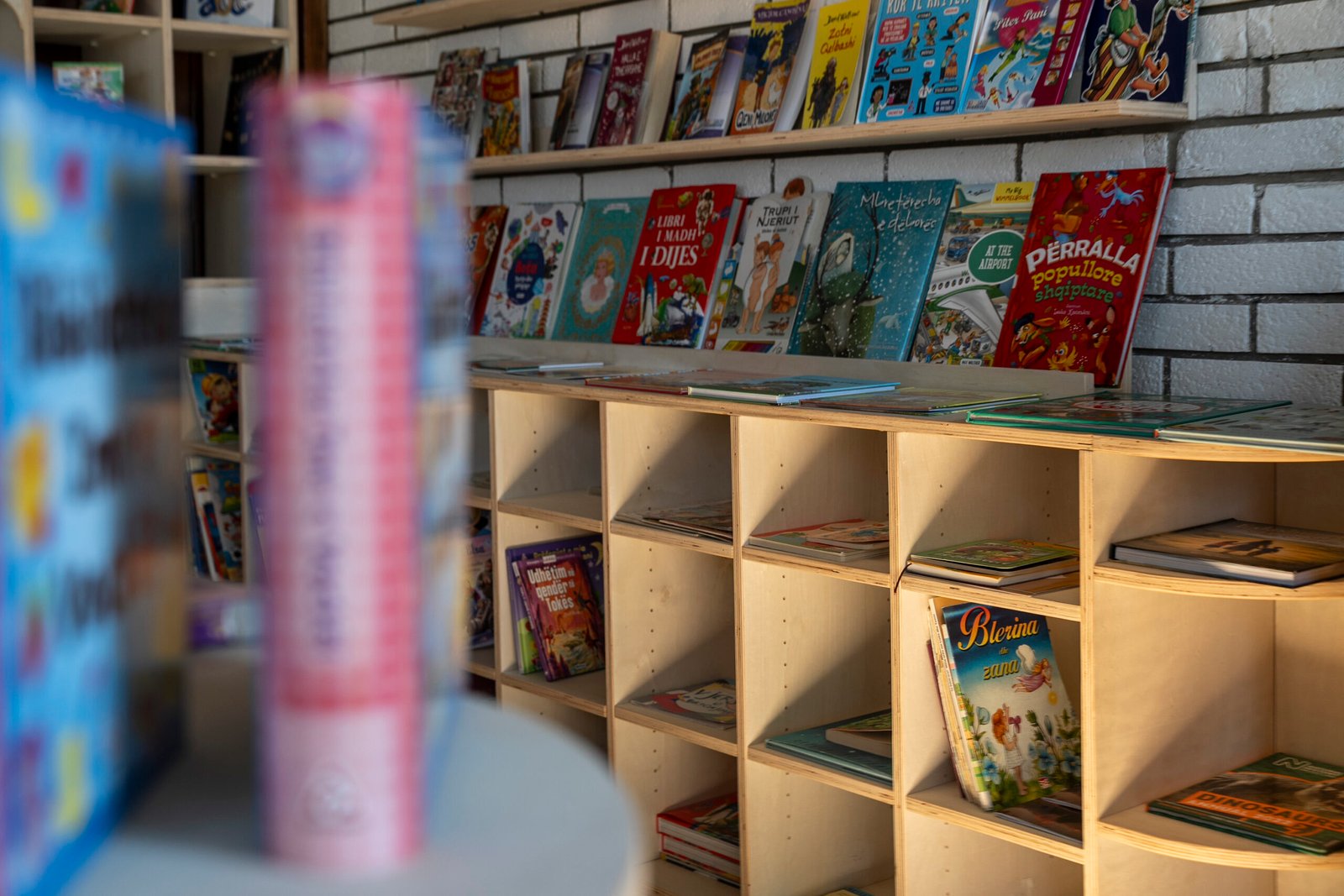
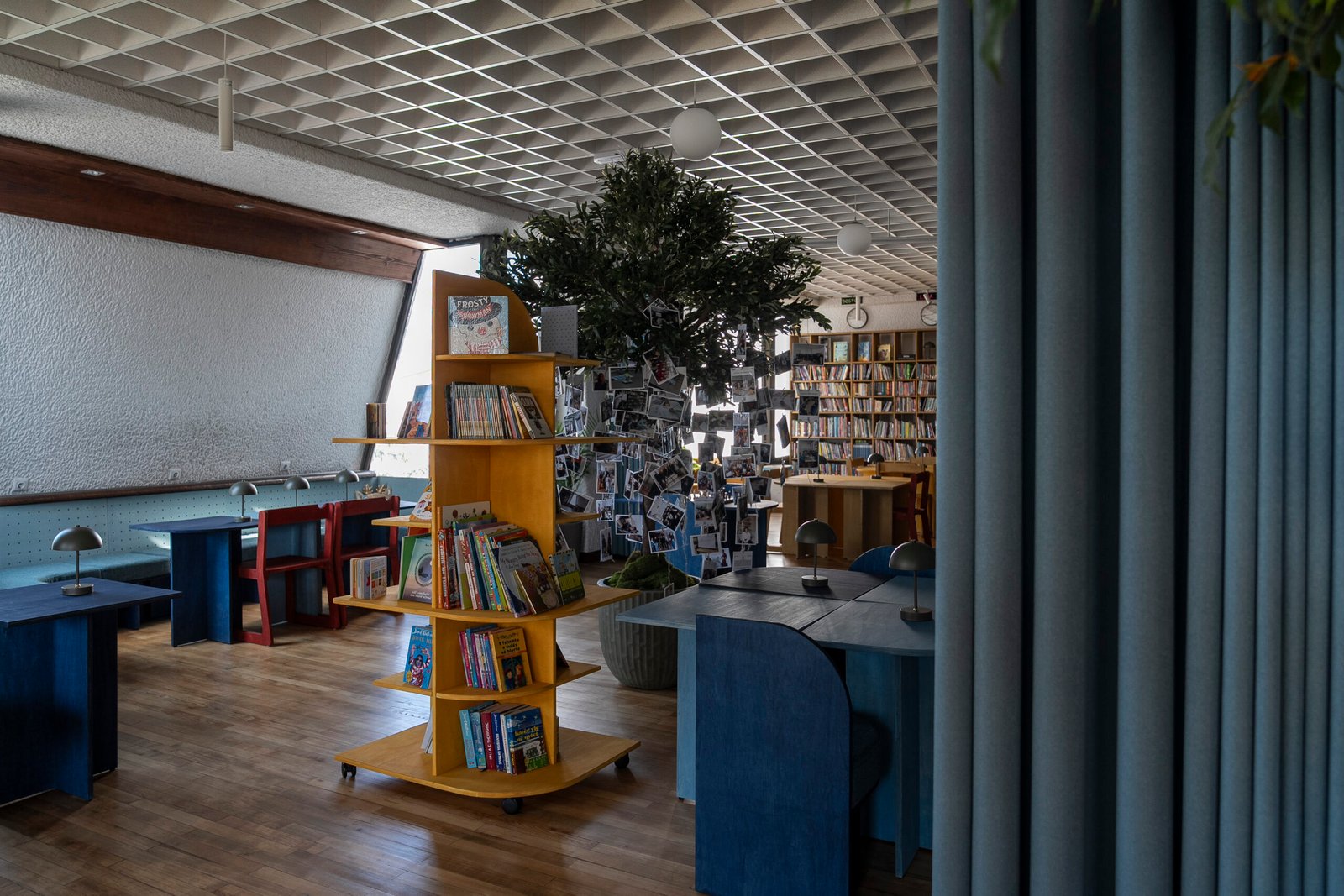
The renovation retains a clear relationship with the Palace of Youth rather than creating a generic colourful room inside it. Shapes and patterns from the original architecture reappear at a smaller scale, and the existing structure remains legible around the new joinery. This continuity matters in a building whose public identity is central to Prishtina: children are given their own space while also being introduced to the city’s architectural inheritance.
The library’s value is practical and urban. Access to books remains uneven for many children in Kosovo, so the project provides both a collection and a room in which reading can become social, self-directed and public. Its strongest decisions are modest—reachable handles, low shelves, daylight, flexible furniture—but together they change who the Palace of Youth is prepared to receive. Participation shaped more than the colour palette; it influenced scale, programme and use.
Design process led by architect Drenusha Blakcori with The Library Project Kosova and participating children. Project information and image origins: Kosovo 2.0. Article reporting by Noa Nikqi; all project photographs by Atdhe Mulla / Kosovo 2.0.