Cadillac Traces Imaginary Circuits Across Its Las Vegas F1 Car
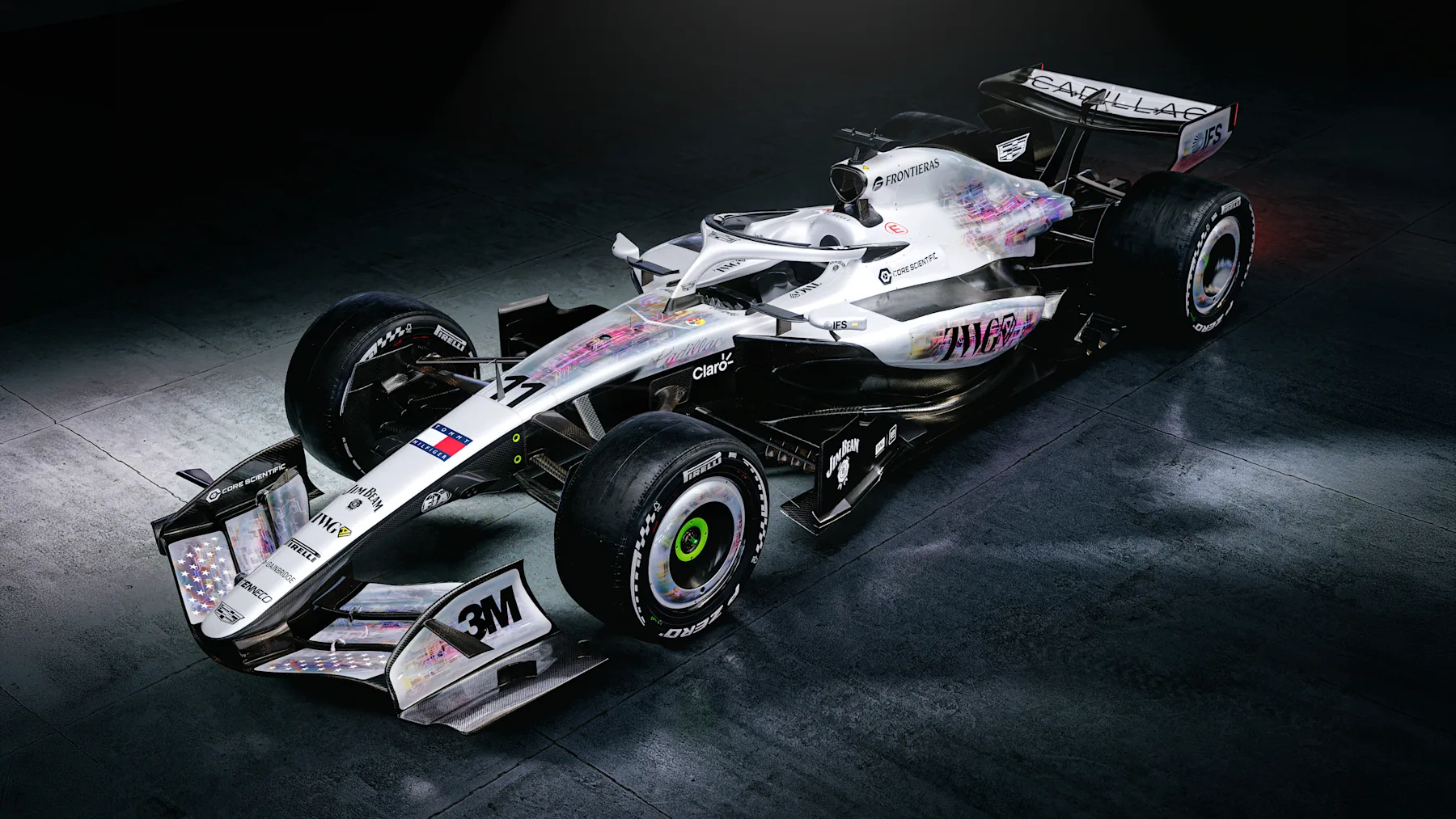
Cadillac’s special livery for the 2026 Las Vegas Grand Prix puts a drawing of the car’s imagined interior on its exterior. Revealed on 17 November, the design keeps the MAC-26’s black-and-white base but runs iridescent lines across the nose, sidepods and engine cover. The bodywork remains opaque. The effect comes from the way the printed pattern meets the car’s real edges, openings and sculpted surfaces.
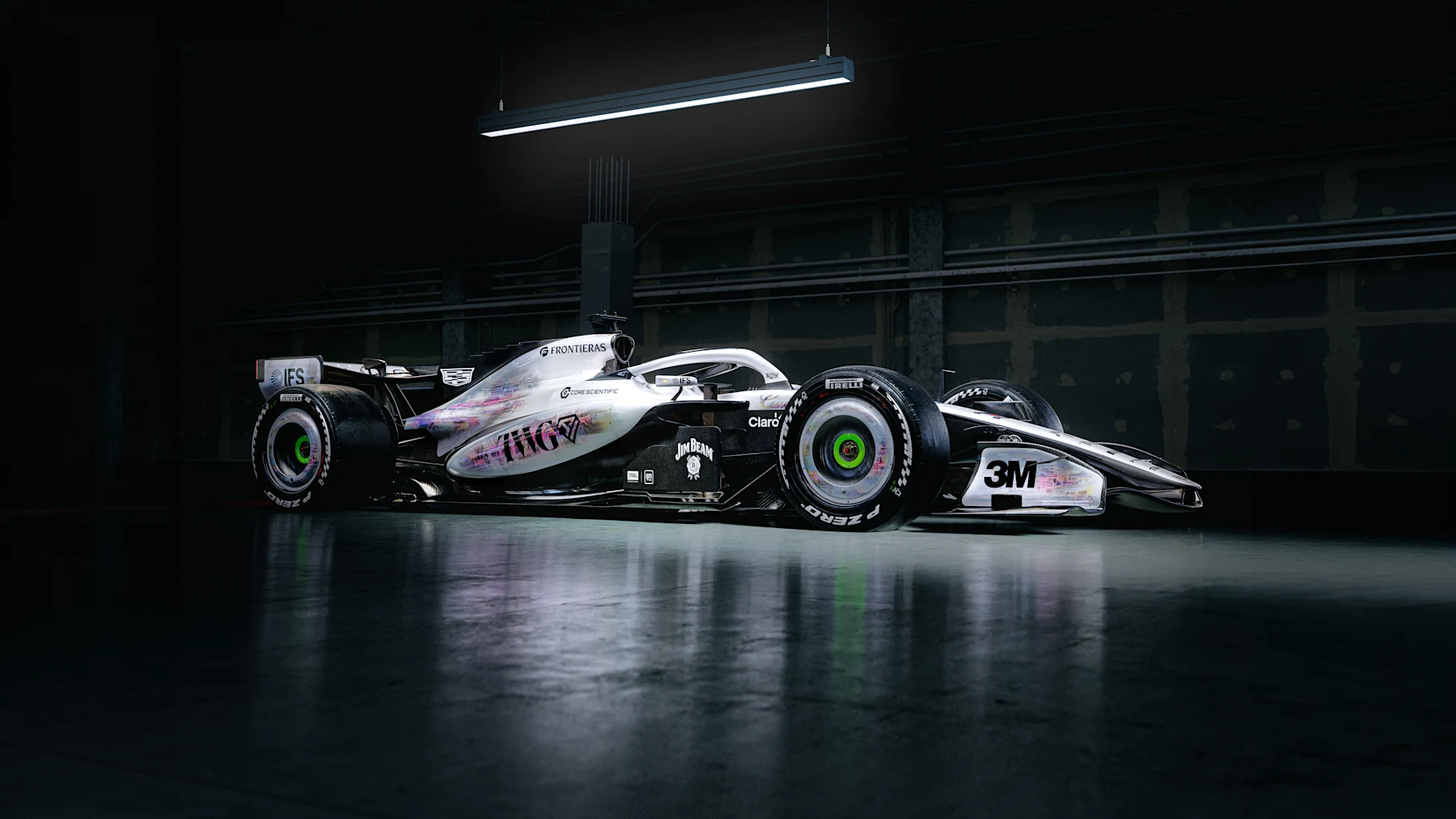
The layout reads differently from each camera angle. From overhead, the lines run lengthwise and make the nose seem to contain a circuit board. From the side, the pattern follows the volume around the air intakes and rises across the engine cover. The white areas leave room for the race number and partner marks to register at speed; the dark areas retain the outline of the regular car.
See-through consumer electronics from around the turn of the millennium are the visual reference. A translucent game controller exposed its actual boards and fasteners. Cadillac’s design reverses that relationship: it draws the promise of hidden components onto a surface that still conceals them. That distinction is clearest where the graphic appears to continue from one panel onto another but breaks at a genuine opening or seam.
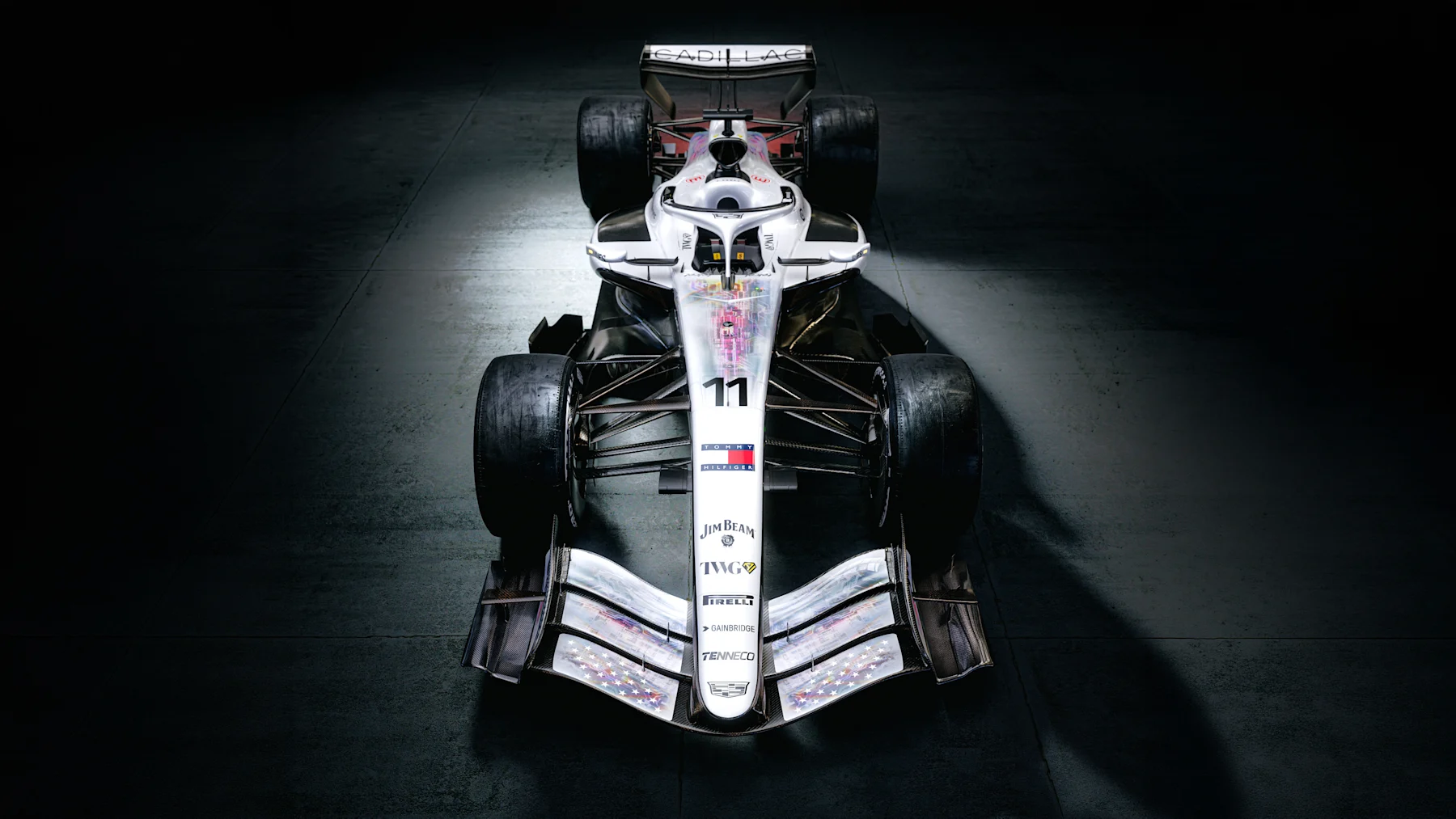
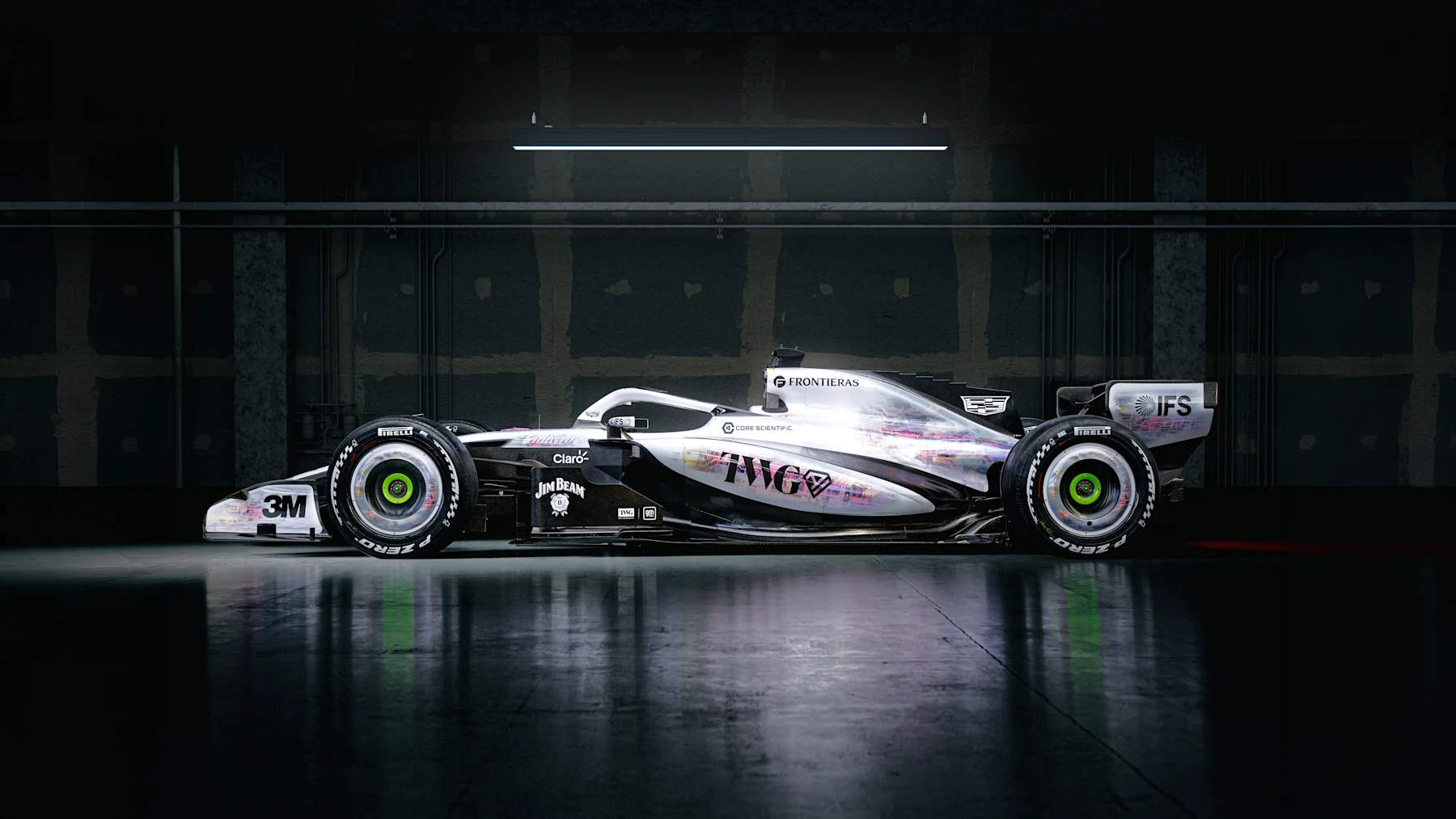
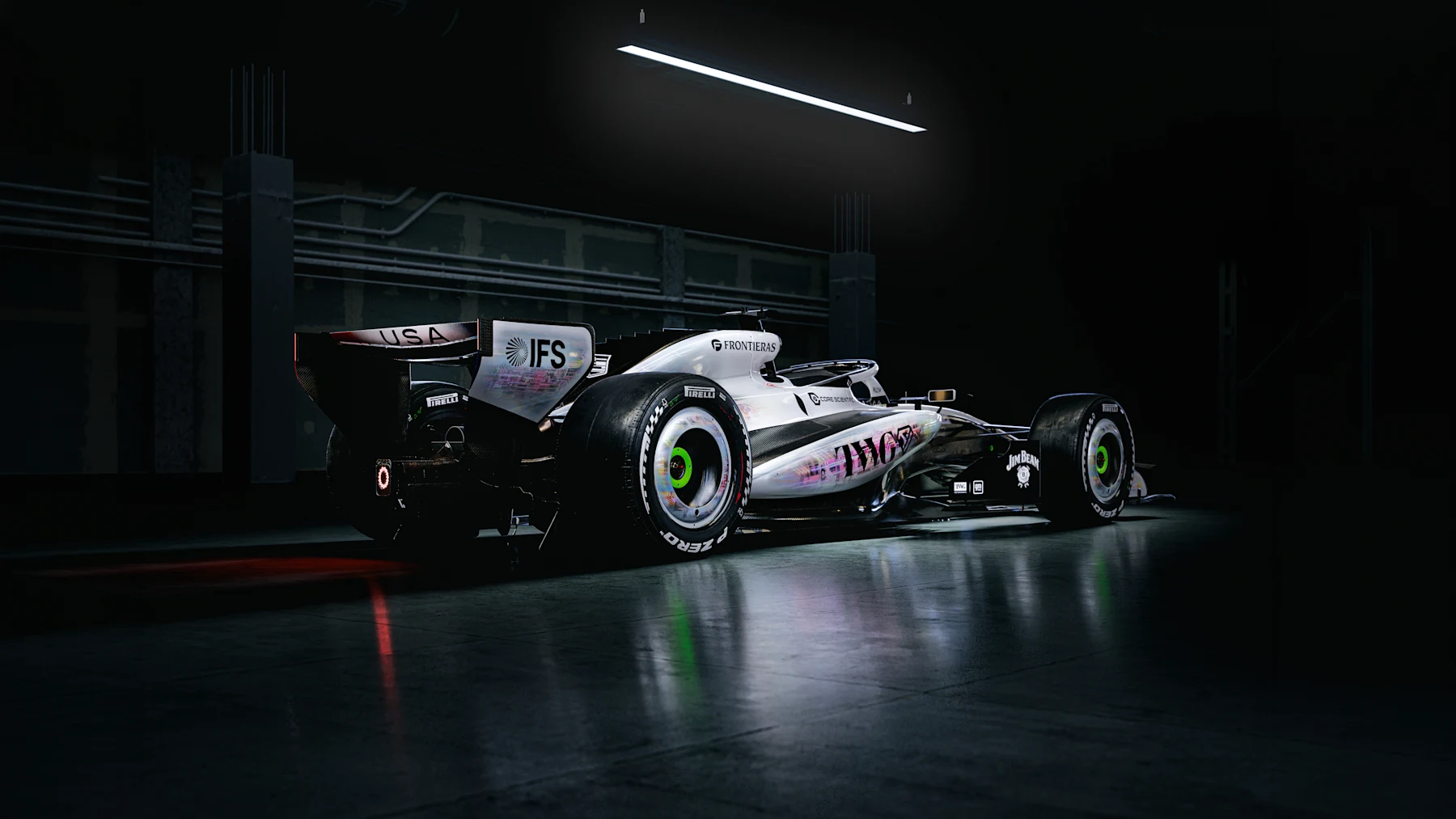
The livery needs to work on hardware that has not been redesigned around the pattern. At the front wing, narrow bands of colour sit next to black elements whose shape still reads clearly. Around the cockpit, the graphics stop where the driver and seat opening interrupt the surface. That restraint gives the eye a few stable landmarks as the graphic wraps around the rest of the body.
Las Vegas also gives the finish a particular setting. Long stretches of dark bodywork are set against bright lettering and fine colour edges, rather than relying on a single large block of colour. At a distance the car still reads as a black-and-white silhouette. Close views reveal the pinks and violets and, most usefully, show how the effect was carried onto separate panels.
The special finish was developed for one event on Cadillac’s debut-season calendar. Its design interest lies in how much the character of a familiar shape can change through colour and line alone. The team’s launch imagery is particularly useful here: the straight-on, side and rear views show how the same graphic is distributed over very different surfaces.
Launch image by Cadillac Formula 1 Team, via Formula 1. See Designboom’s design report and Formula 1’s official launch gallery.