Blue Bottle Bangkok Wraps Coffee in a Blue Lantern
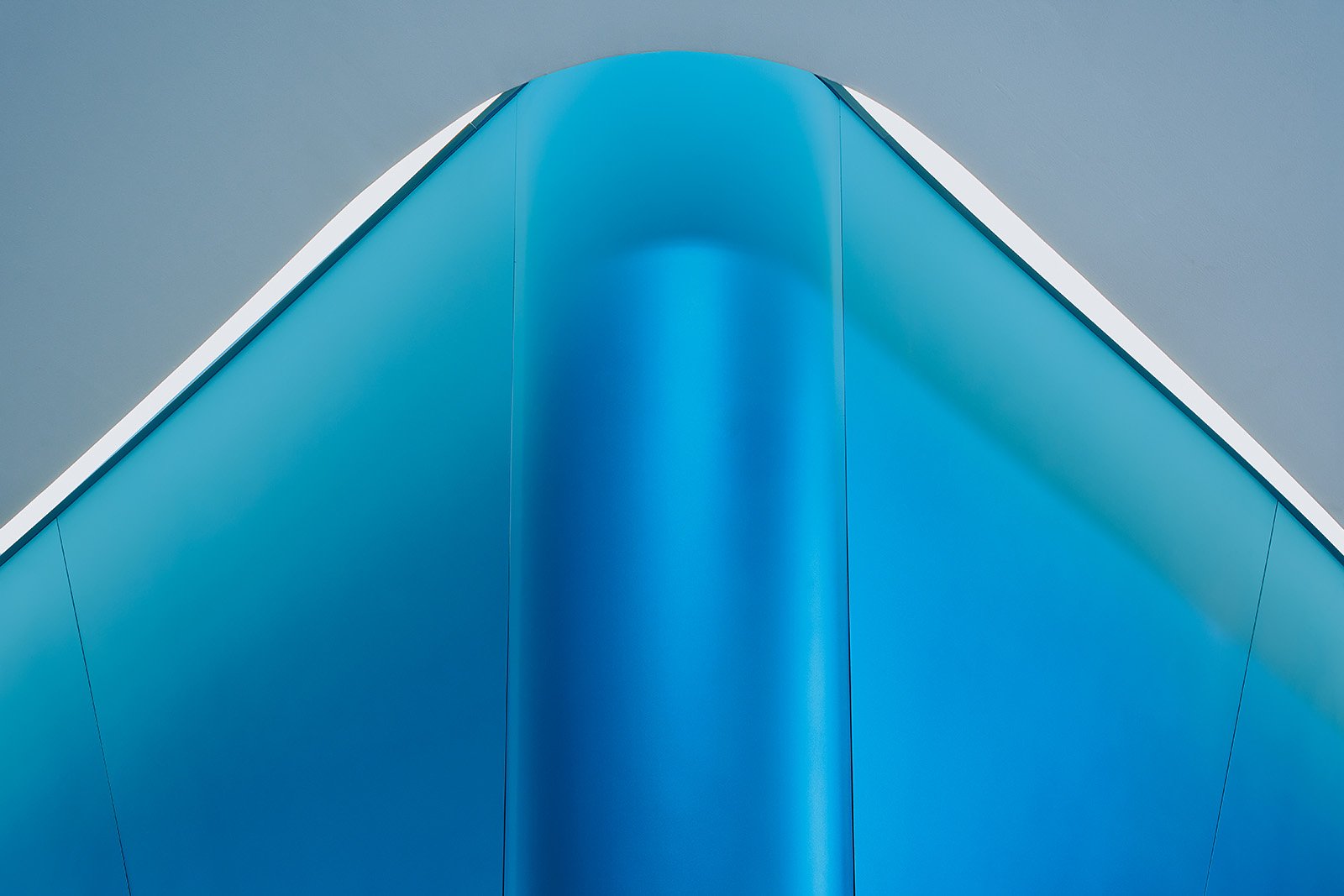
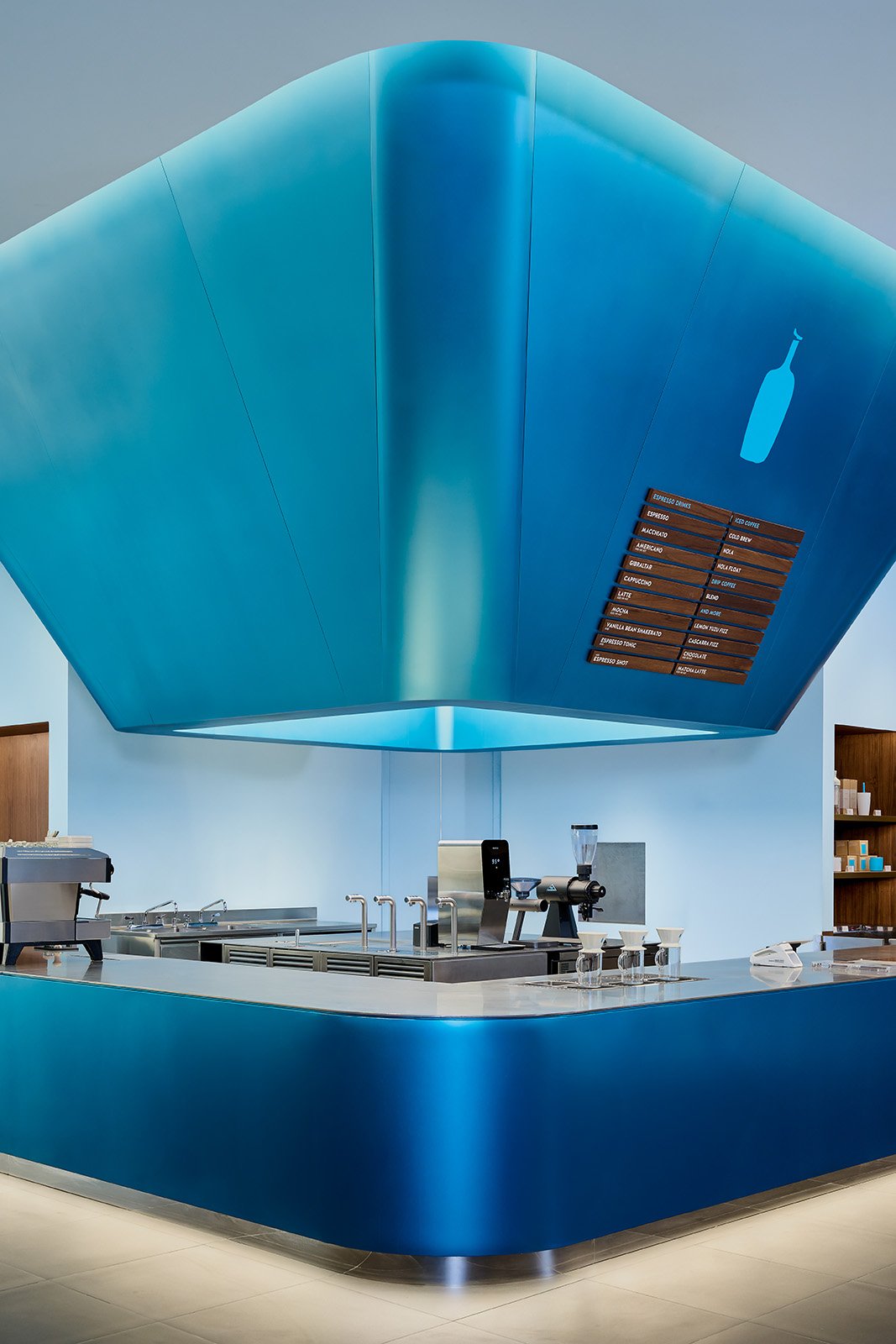
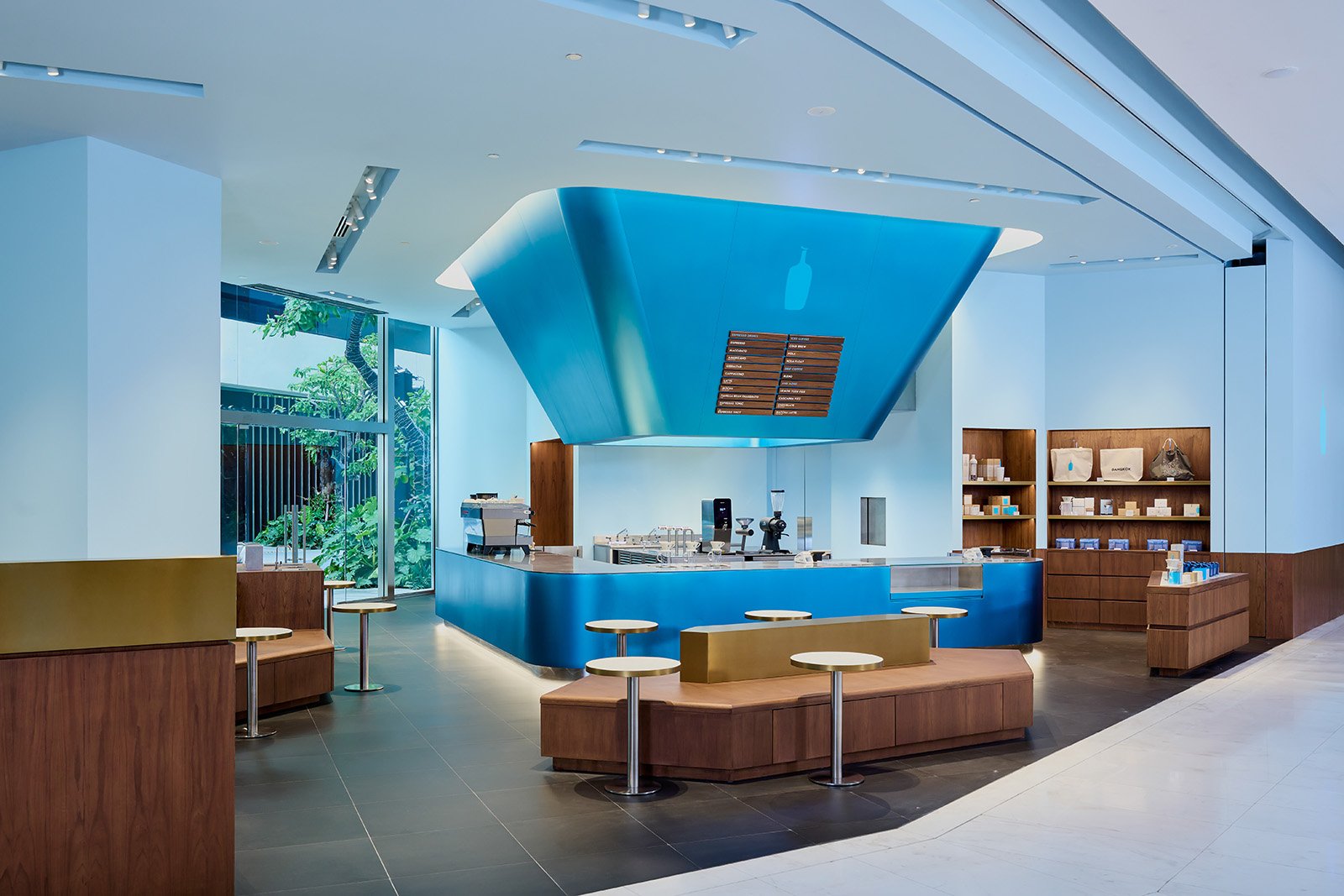
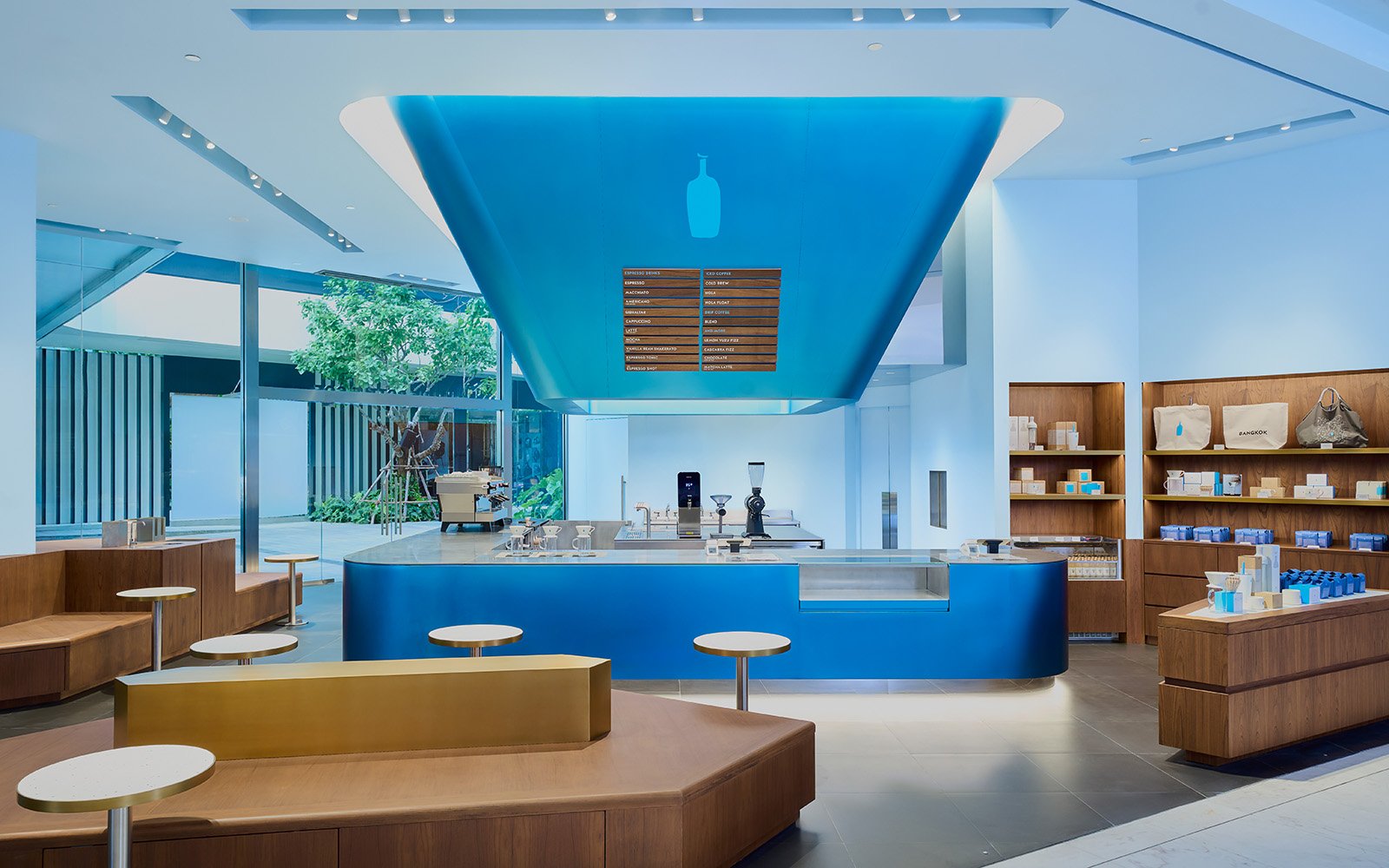
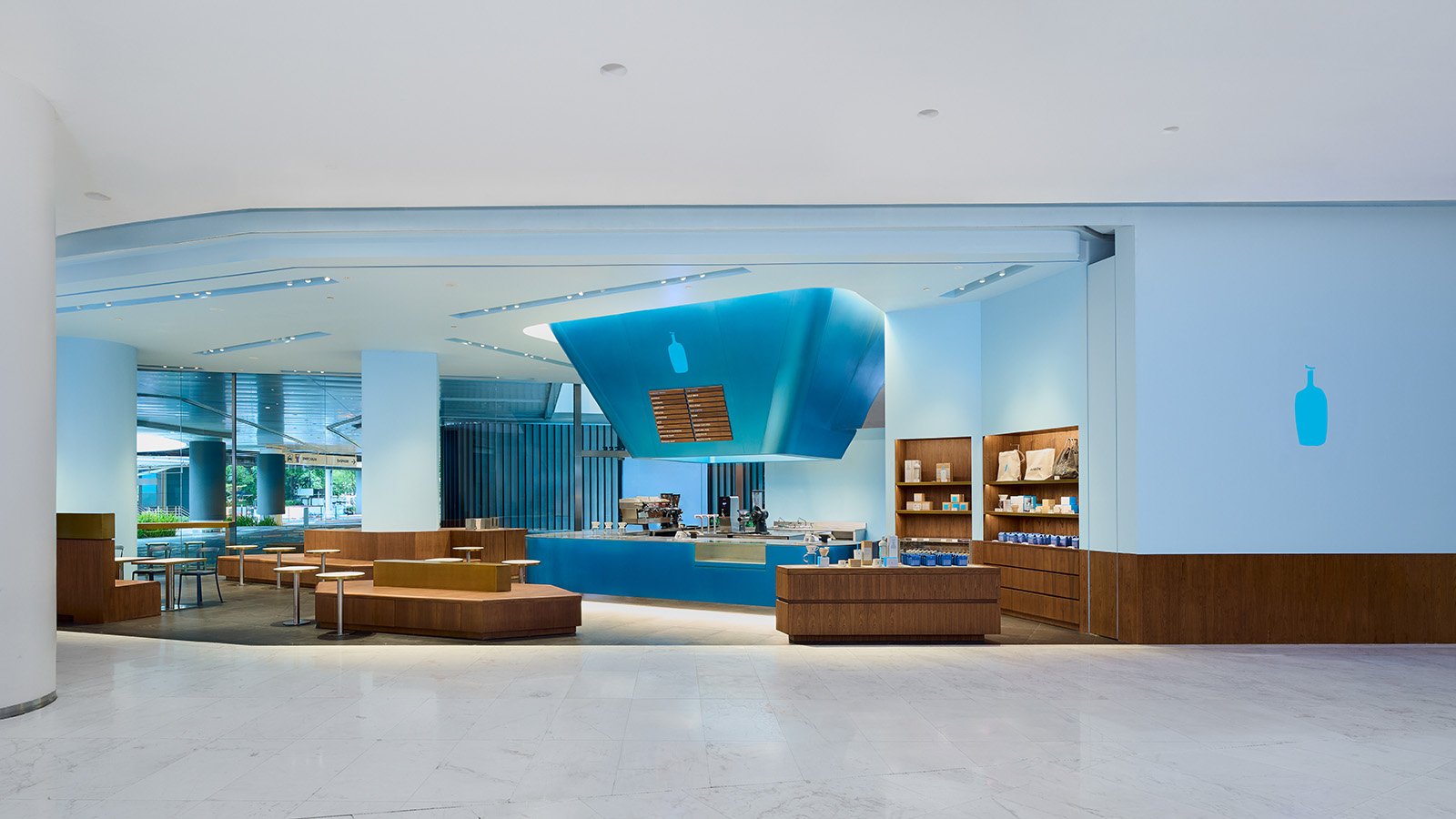
Blue Bottle Coffee’s first Thailand flagship opened in 2026 at EmQuartier in Bangkok with an interior by Tokyo studio I IN. The project occupies more than 200 square metres and seats over 80 guests, yet its identity is concentrated in one strong spatial device: a blue lantern-like enclosure that gathers the counter and seating beneath a luminous suspended volume.I IN drew on the colour and atmosphere of Thai lantern festivals without reproducing a literal traditional object. A translucent blue skin filters light and makes the café visible from the surrounding retail circulation. Gold-toned details, teak and pale surfaces introduce warmth beneath the cool envelope.A translucent blue volume gathers the café beneath filtered light. Photograph courtesy of I IN.The interior is organised as a sequence rather than a single open room. Visitors approach the lantern, pass the service counter and move towards quieter seating around its perimeter. Curved edges keep circulation fluid, while the change in ceiling height makes the centre feel compressed and focused before the space opens towards the mall.Custom furniture follows the same economy. Rounded tables and benches avoid competing with the overhead form, and their warm timber surfaces balance the blue light. The counter is treated as part of the architecture, not inserted equipment, giving preparation and service a clear place within the composition.The counter is integrated into the lantern composition. Photograph courtesy of I IN.Teak furniture warms the cool blue enclosure. Photograph courtesy of I IN.Curved edges guide movement through the compact flagship. Photograph courtesy of I IN.The studio gallery shows a project that uses colour as an architectural boundary rather than surface decoration. That distinction makes it valuable: the blue element controls light, scale, visibility and movement at once. It is an interior with a memorable image, but the image grows from spatial organisation. The project also avoids filling every surface with branding. Blue Bottle’s identity appears through the disciplined palette, the visibility of preparation and the clarity of the central form. This leaves enough visual quiet for people, cups and changing daylight to animate the room. For retail interiors, that restraint is significant: a single architectural idea performs orientation, atmosphere and recognition, while the furniture and service elements support it rather than competing for attention. The result is commercial space with a clear hierarchy: architecture establishes the room, objects make it usable and branding stays present without overwhelming either.