Comillas Gives Its Waterfront Back to People
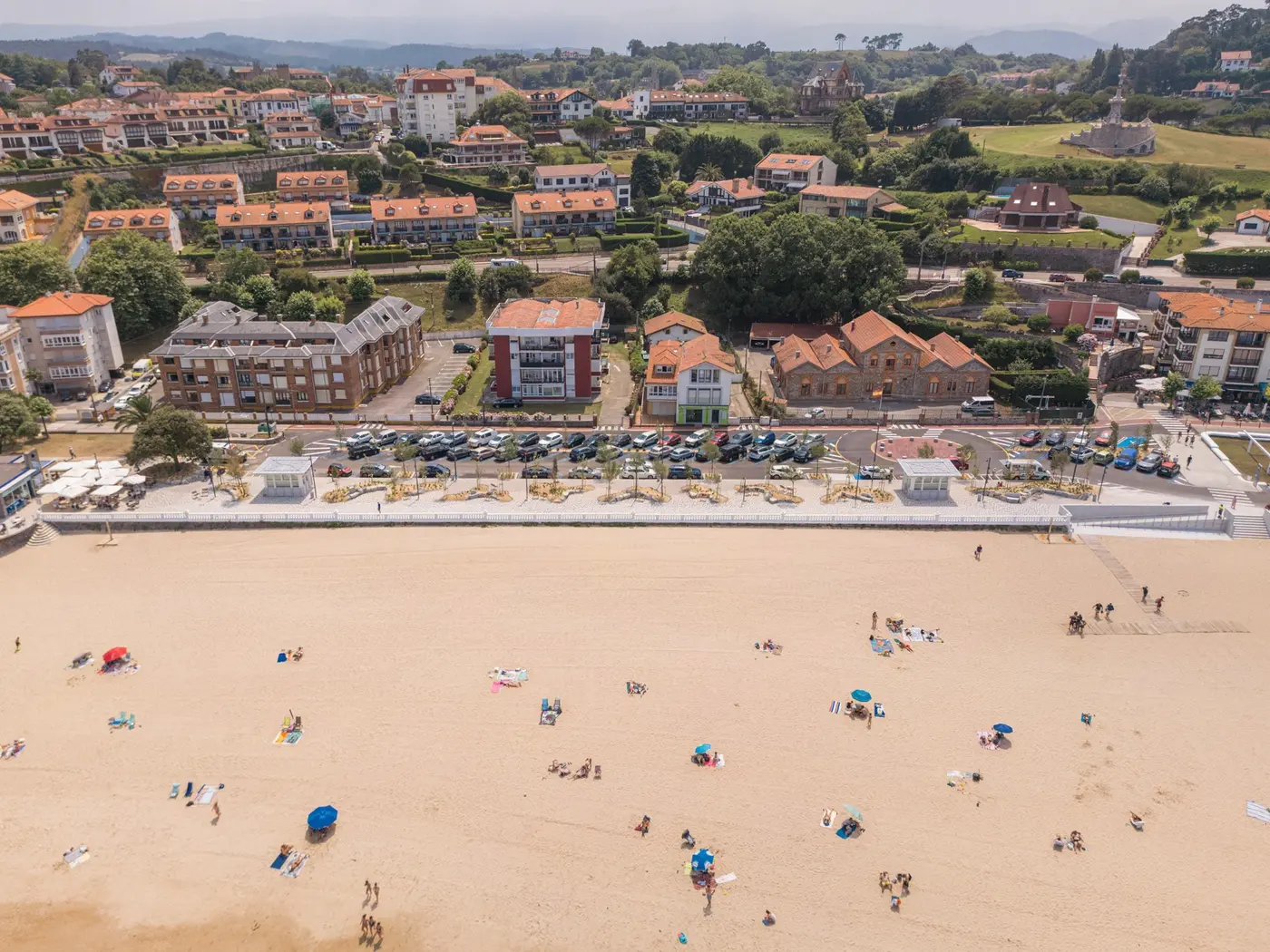
Héctor Navarro and arkhitekton have given Comillas, on Spain’s Cantabrian coast, a waterfront shaped around walking and staying. Completed in 2026, the project replaces a narrow pavement and an area dominated by parking with a wider public landscape. Its starting point is an everyday coastal condition: sand moving beyond the beach.
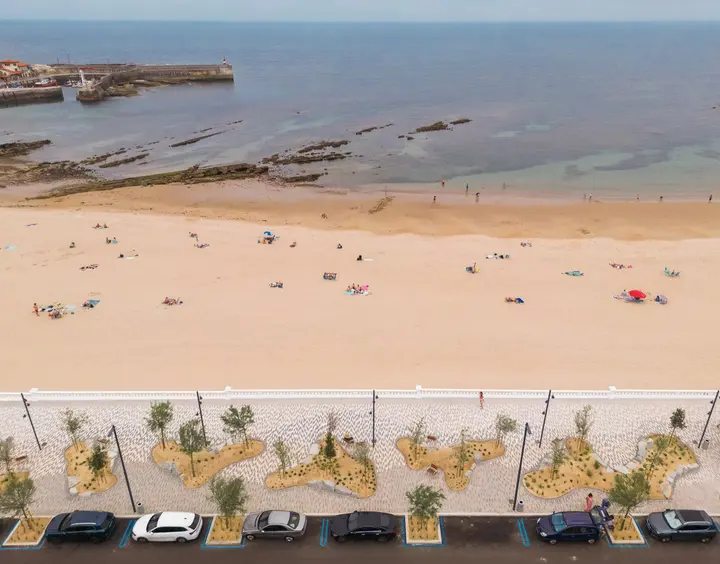
Instead of treating that movement only as a cleaning problem, the design makes room for it within permeable paving and planted ground. Two parallel spaces organise the waterfront. A clear route runs beside the historic balustrade, while an inland strip introduces vegetation, small changes in level and places to rest.
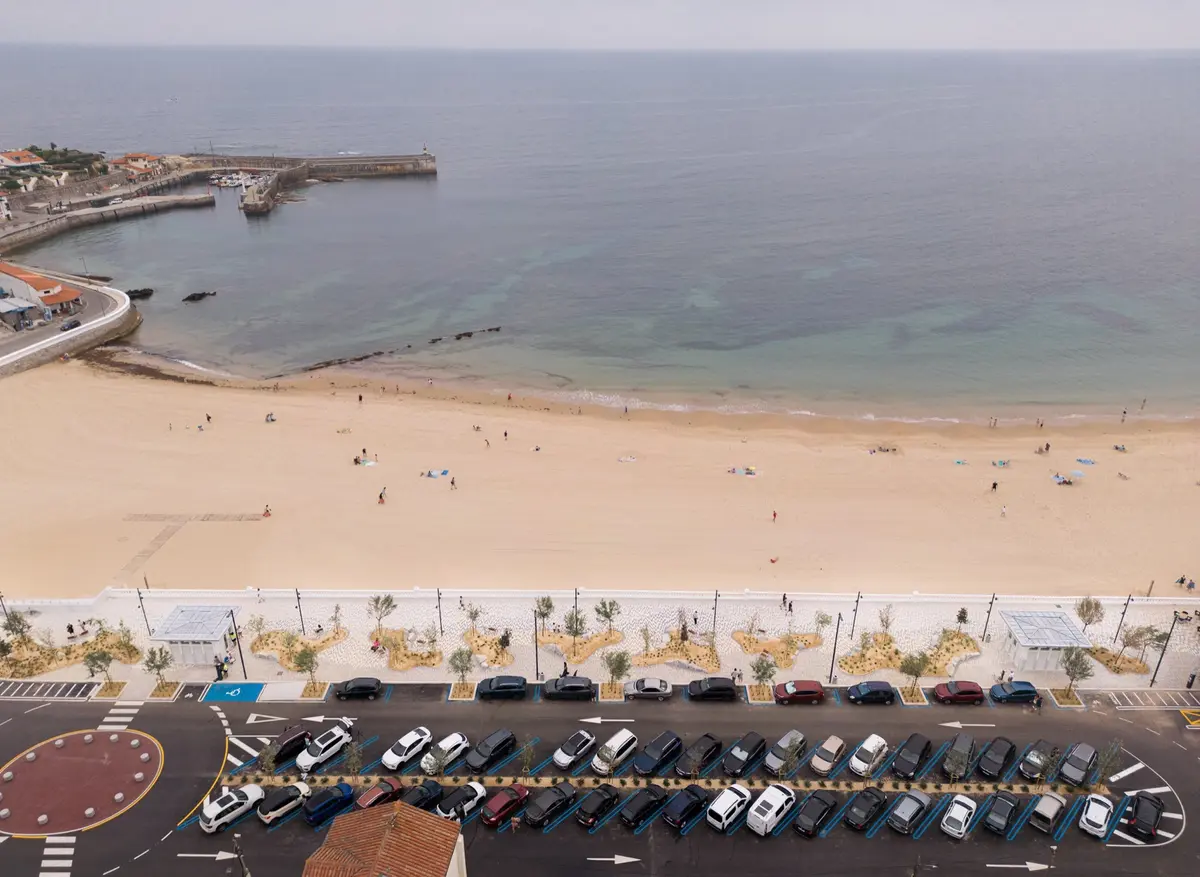
The material choices connect these spaces. Reclaimed limestone blocks, previously used as coastal armour, help shape the ground and provide informal seats. Conventional benches with backs and armrests offer another way to pause. Bands of concrete paving give the surface a changing pattern of tones and textures.
The distinction between movement and rest is important. A public waterfront needs room for people who are passing through, but also for those who want to sit beside someone, watch the sea or stop with children. Separating those rhythms can make a promenade more useful without dividing it into isolated zones.
The planted strip gives the route a second edge, with a character different from the balustrade and open beach. In the project photographs, the space is read through the relationship between ground, planting and people, rather than through a single large architectural object. The paving and seating are the architecture of the place.
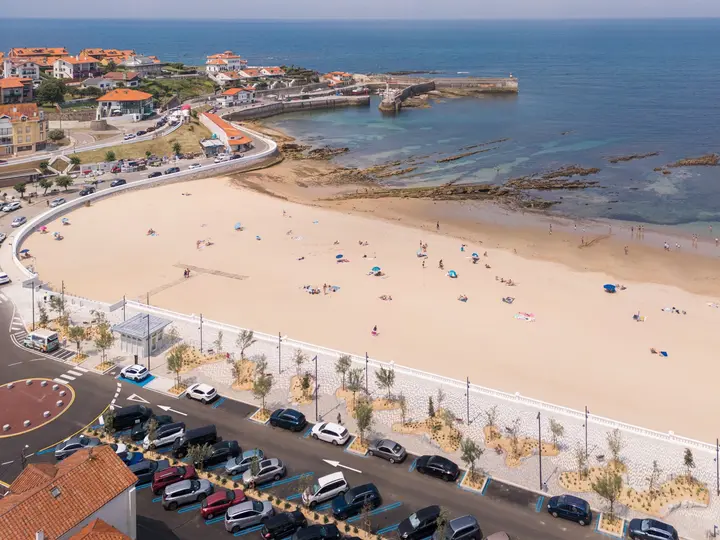
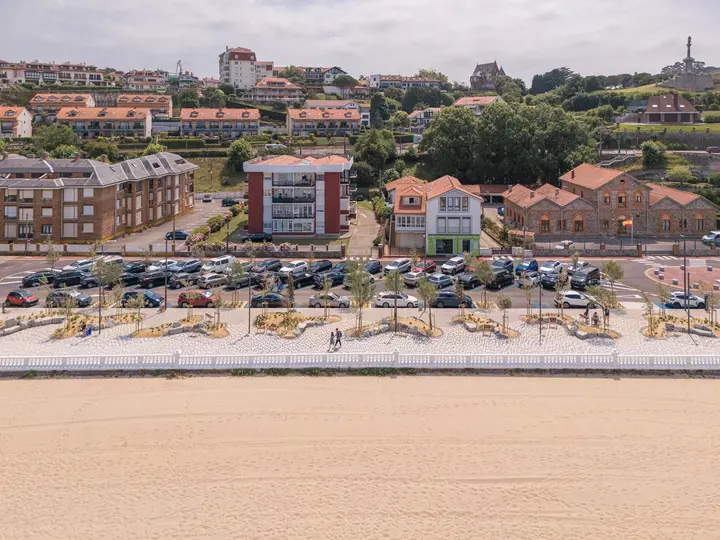
Other parts of the intervention include renewed beach access, kiosks, lighting and changes to parking. Together, they place the walking route within the wider workings of the town. The project was inaugurated on 7 July 2026, according to Spain’s Ministry of Territorial Policy, which reported on the completed waterfront works.
For designers, the useful lesson is the attention given to ordinary decisions. Where a path remains clear, how a seat meets planted ground and how people move between town and beach all shape public life. These are small-scale design choices with effects that extend across the whole waterfront.
The proposal also leaves part of its character to time. The architects expect planting to establish shade as it grows. That means the finished construction is one stage in the landscape’s development. Its long-term quality will depend on how well the spaces continue to support everyday use and care.
The architects’ description and photographs were published by gooood and ArchDaily. Photographs by Imagen Subliminal, Miguel de Guzmán and Rocío R. Rivas, originate from gooood’s project gallery.