Ryue Nishizawa Turns a Landfill into a Place to Look
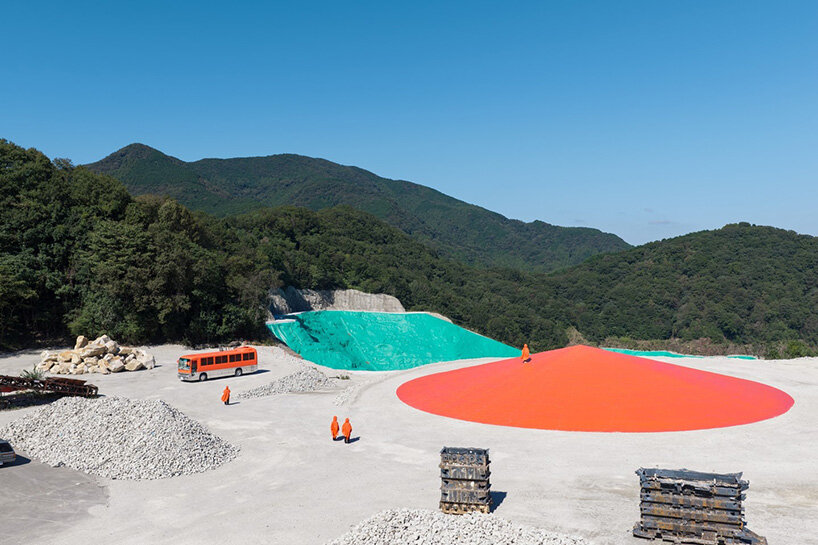
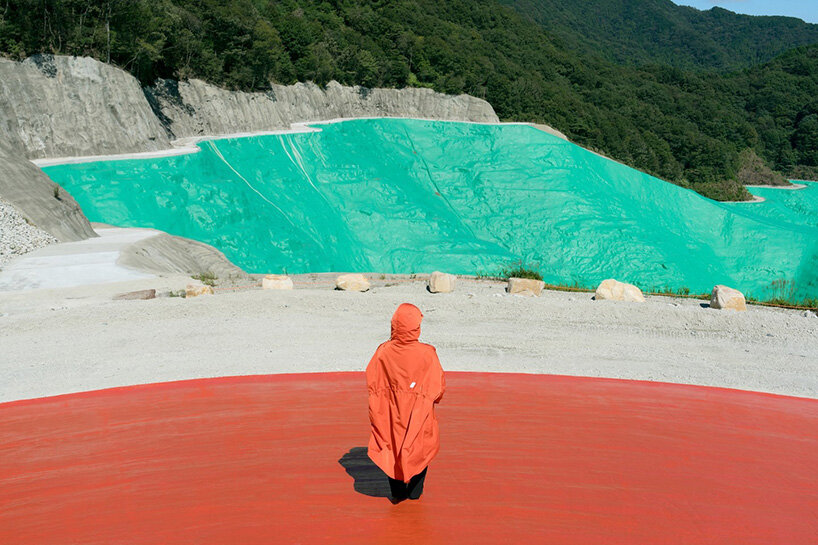
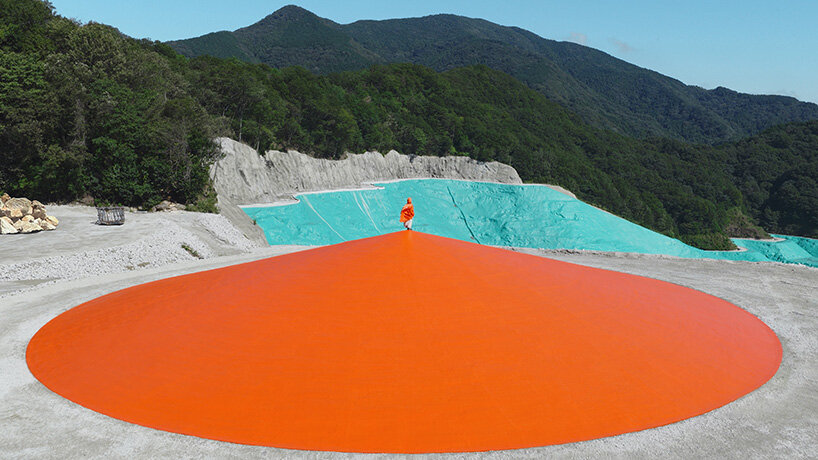
An orange surface rises into a shallow peak against the turquoise lining of a managed landfill in Toon, Ehime, Japan. Ryue Nishizawa’s observation platform, part of Landscapes of Waste, gives visitors a place from which to look at an industrial terrain normally kept outside everyday public experience. The installation was built for Setouchi Art and Industry 2026.
The setting is Oono Development’s integrated recycling complex, where an engineered valley receives waste. Its visible layers of exposed ground, lining and surrounding vegetation make the site’s construction unusually clear. The platform adds a precise, strongly coloured surface to this already artificial landscape without attempting to disguise its industrial purpose.
The architectural move is primarily one of position and attention. A viewpoint establishes where the visitor pauses and how the larger basin is encountered. The orange surface and the turquoise lining remain visually distinct, allowing the intervention and the infrastructure to be read together. A small place for occupation becomes a reference point within a much larger working terrain.
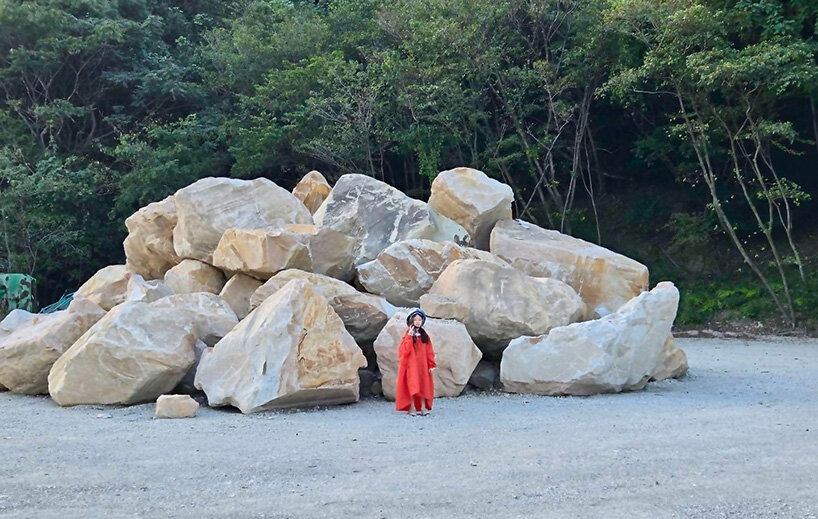
The exhibition is supervised by Kazuyo Sejima. Nishizawa designs the observatory; Shingo Masuda and Katsuhisa Otsubo contribute gathering places and a bus stop, while Suzuko Yamada develops the visitor bus and workwear. These separate contributions make arrival, movement and stopping part of one designed sequence.
Visitors travel into the site by bus and wear red-orange workwear related to the colour of the installation. This changes the relationship between a distant industrial view and a bodily experience of scale. In the project photographs, people become small but conspicuous figures within the basin, providing a measure of its size.
The result is useful to examine as public-space design, even though it is situated within an operating industrial complex. Its value comes from making a difficult setting observable. A conventional scenic lookout tends to frame a landscape as something complete and separate from the viewer; here, the subject is a terrain that is actively being altered through material processes.
That distinction also sets a limit on what the intervention can claim. The platform does not itself resolve the environmental questions raised by waste disposal. It creates a setting in which those questions are harder to keep out of sight. The architectural interest lies in how a modest place to stand can redirect attention towards the larger systems around it.
Designboom documented the installation on 26 October 2026. Photographs shown here are supplied courtesy of Setouchi Art and Industry 2026. They document the wider exhibition as well as Nishizawa’s platform.