Koto’s Haku Places a Hotel Room on Wheels
With suites already operating at Yorkshire’s Denton Reserve, Koto explores how a compact guestroom can be organised around its setting rather than a hotel corridor.
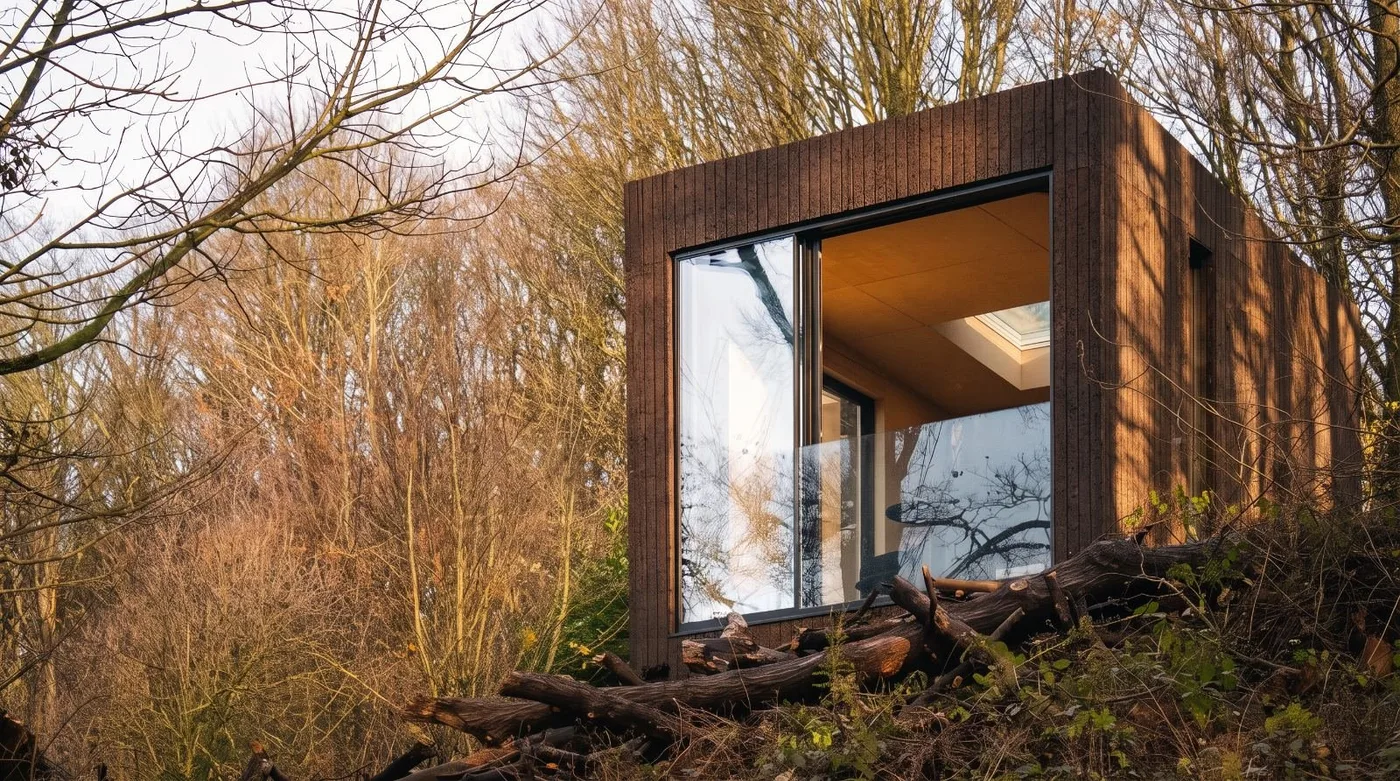
A hotel room generally begins with a fixed address, a corridor and a view selected by the building around it. Haku approaches that familiar programme from another direction. Designed by Koto, the self-contained suite sits on a wheeled chassis, allowing the room itself to be positioned in relation to the landscape.
The studio lists a footprint of 9.74 by 3.60 metres and a programme for two guests: a king bedroom, a bathroom with a walk-in shower and a wood-burning stove. Full-height glazing and a skylight make the surroundings part of the room’s experience. Three suites are already installed at Denton Reserve in Yorkshire; the studio does not give their precise installation date on its project page.
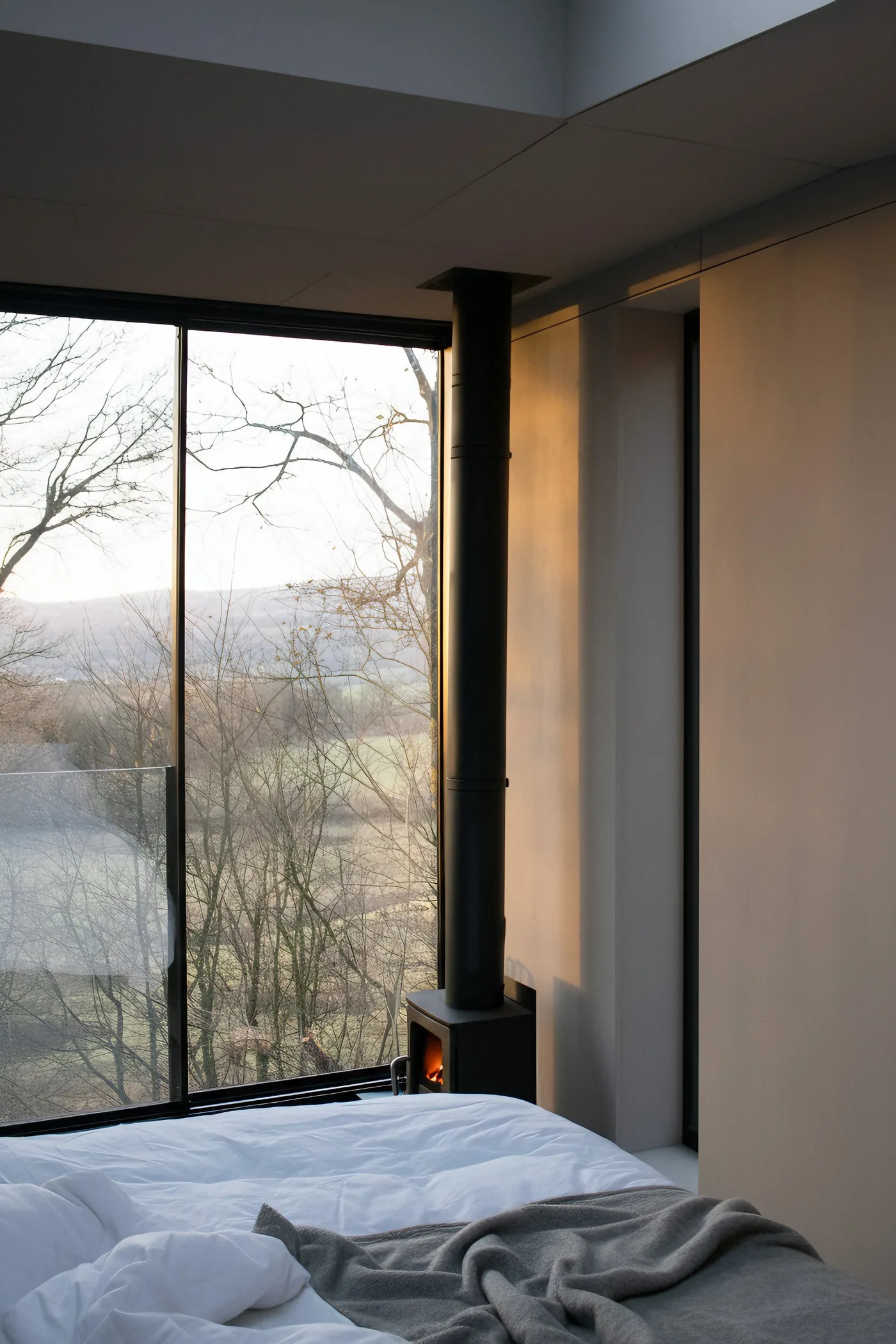
The architectural interest lies in the tension between compactness and the view. Within a narrow footprint, a guestroom can easily feel like a small container with furniture fitted into it. Giving a significant part of the enclosure to glazing shifts attention outward. The trees and changing daylight provide visual depth beyond the room’s physical boundaries.
The skylight introduces another relationship to the setting. A window frames a horizontal view, while an opening above brings the sky into the experience of occupation. Together, they allow a small interior to register different aspects of its surroundings without increasing its floor area.
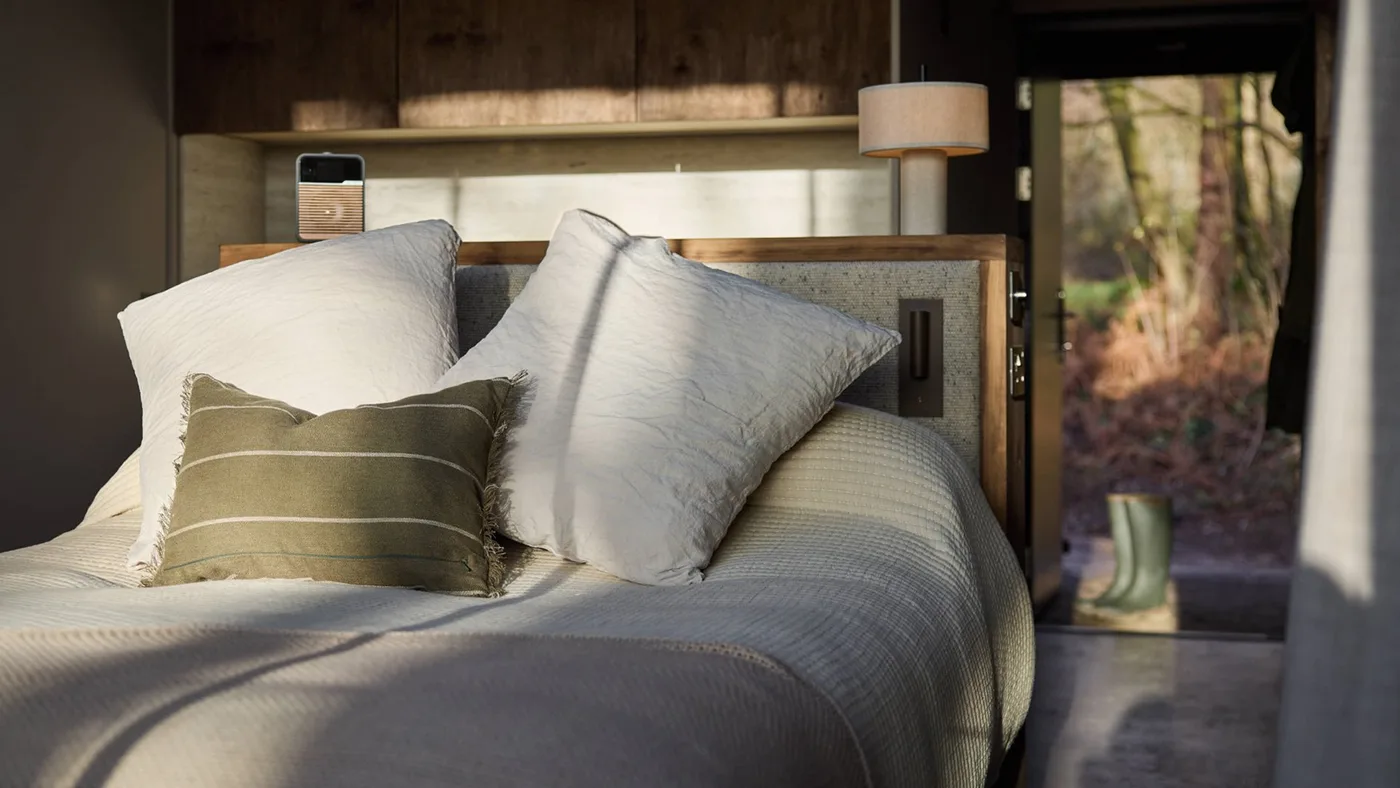
Koto Living curates the furnishings in a warm, natural palette. The restraint is useful in a space where the architecture already relies on light and landscape for much of its character. A compact room benefits from a coherent interior rather than a succession of competing decorative moments.
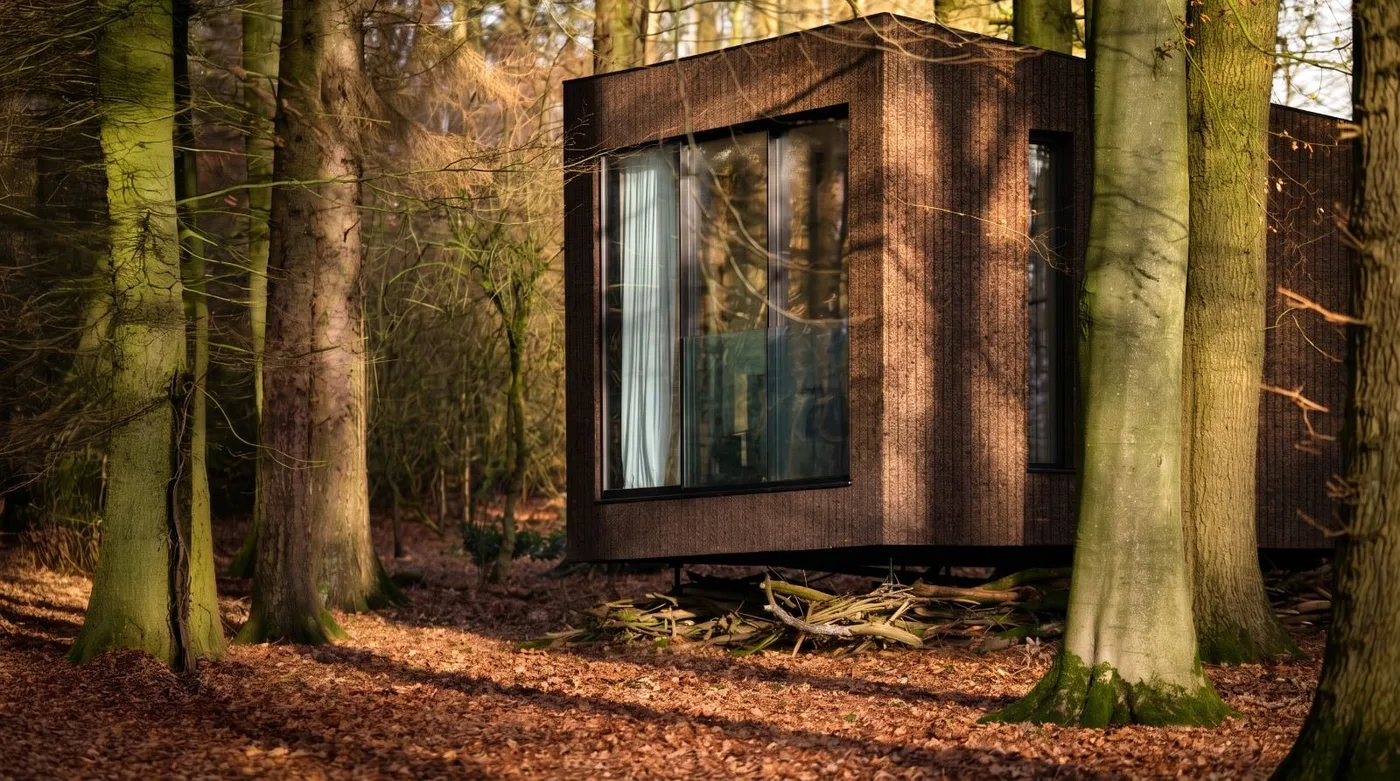

Haku is offered in configurations connected to services or operating off-grid. The latter includes solar panels, batteries and water storage. These systems are part of what makes a detached suite possible, although the apparent simplicity of the room should not obscure the practical work of access, servicing and site preparation.
Mobility changes the relationship between hospitality and place, but it does not make place irrelevant. Position, orientation and the route to the door still determine whether an isolated room feels thoughtfully situated. A wheeled building can offer flexibility; it still requires a considered site.
Haku raises a useful question for small-scale accommodation: how much of the experience needs to be constructed, and how much can be provided by what is already there? Its compactness makes the answer unusually clear. The room supplies shelter and the essentials of a stay, while its openings give the landscape a substantial role in the interior.
Source and image origin: Koto.