A Cider Press Becomes a Stool in LE PRESSOIR
LE PRESSOIR begins with a piece of machinery that already has a strong shape: the wooden screw of a French cider press from the 1930s. Studio Jumel and Ariane Ronot turn that single component into a stool, allowing the original thread to remain visible in the finished object.
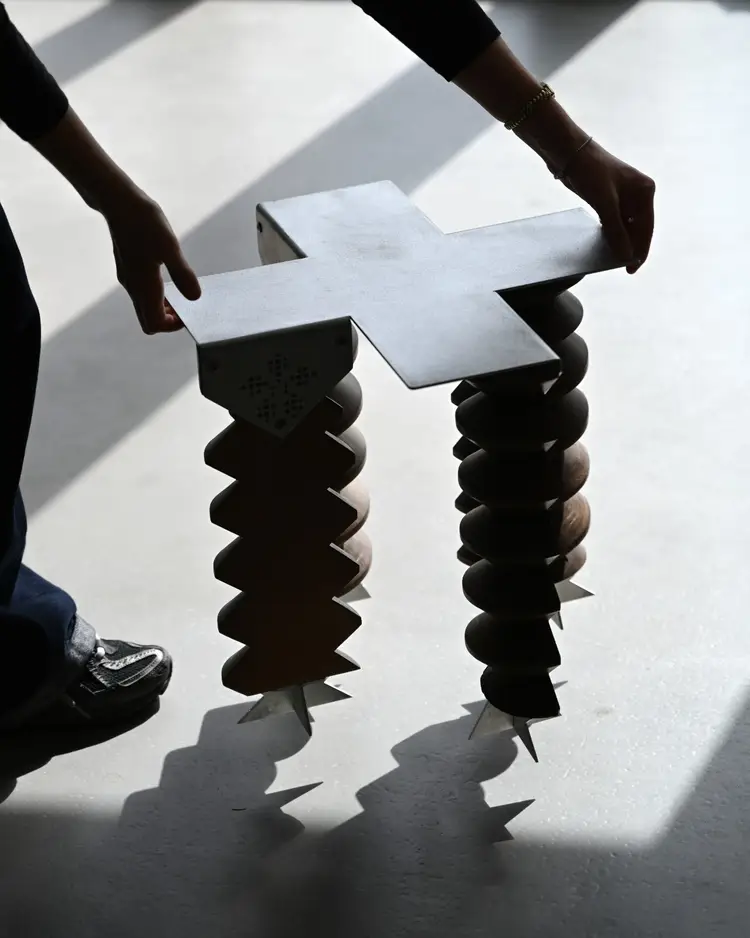
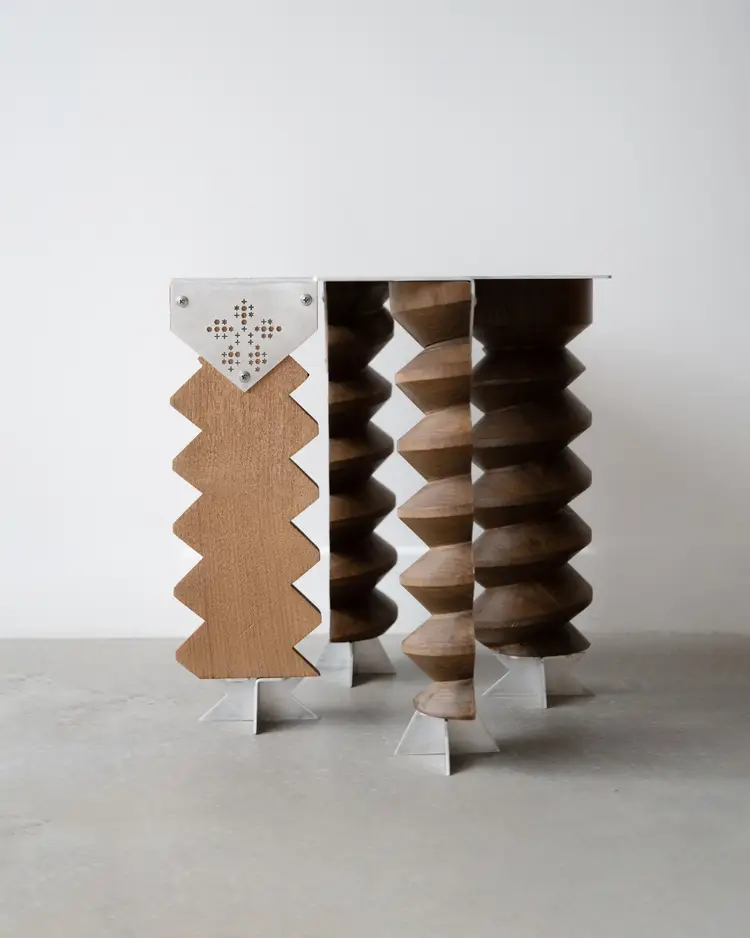
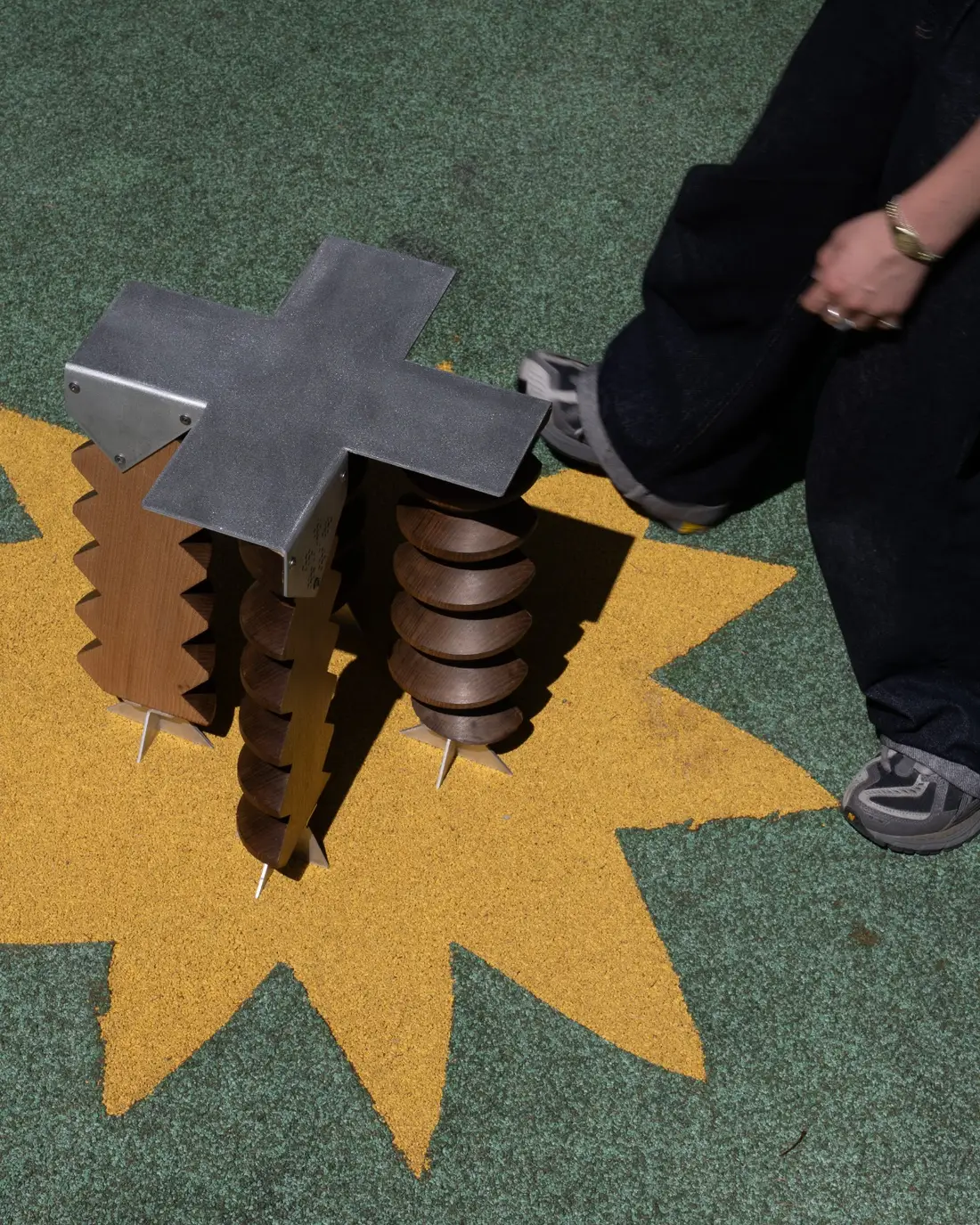
Cut along its length and then across, the screw produces four legs. Their surfaces retain the curves and ridges that once belonged to the pressing mechanism. Placed beneath a new seat, these fragments read as supporting elements, yet still make the object’s earlier life easy to recognise.
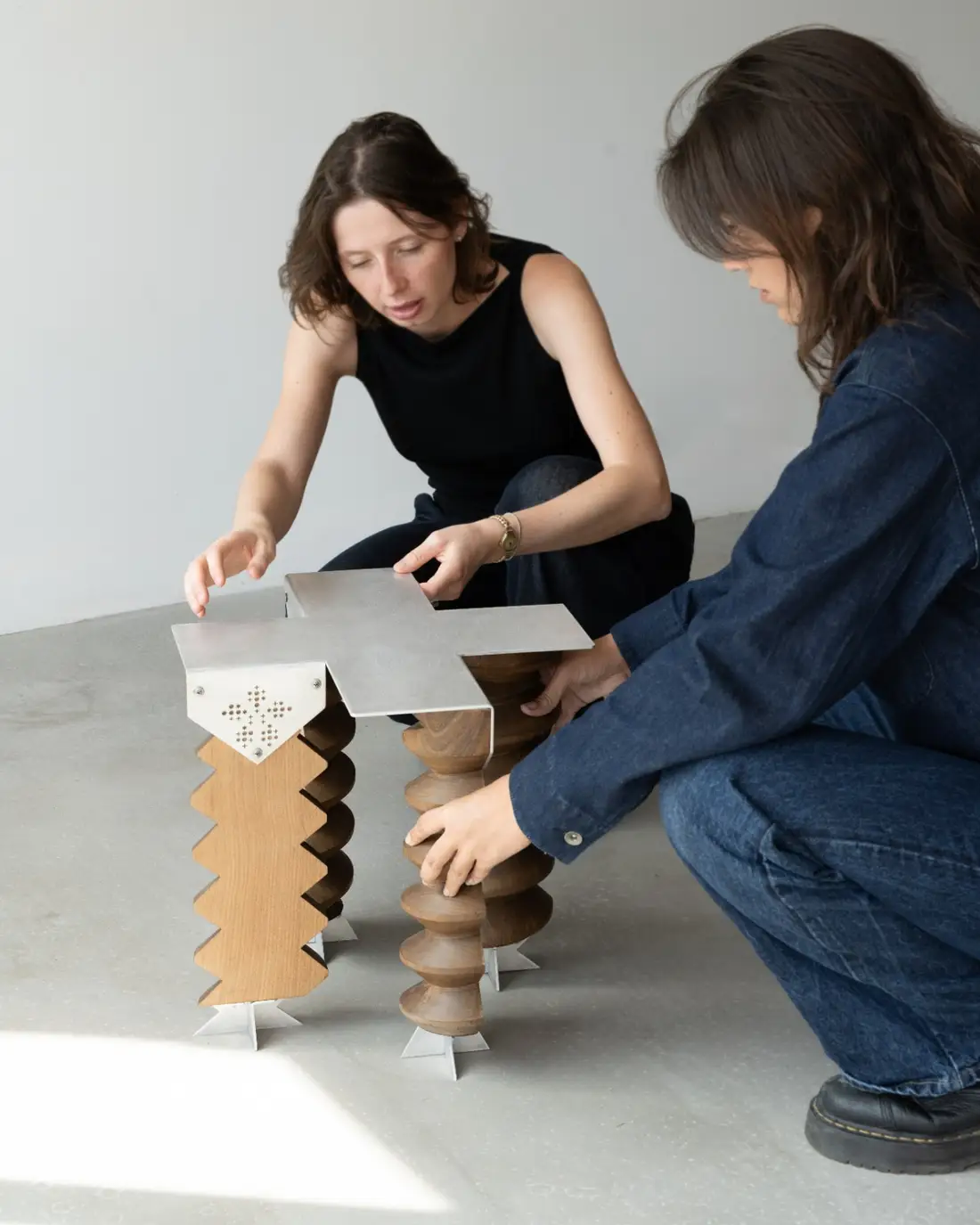
Brushed aluminium introduces a different texture and a more precise geometry. A cross-shaped connector holds the legs together, drawing on the outline of a screw head. Its openings refer to an apple blossom, making a small connection with the fruit the press once processed.
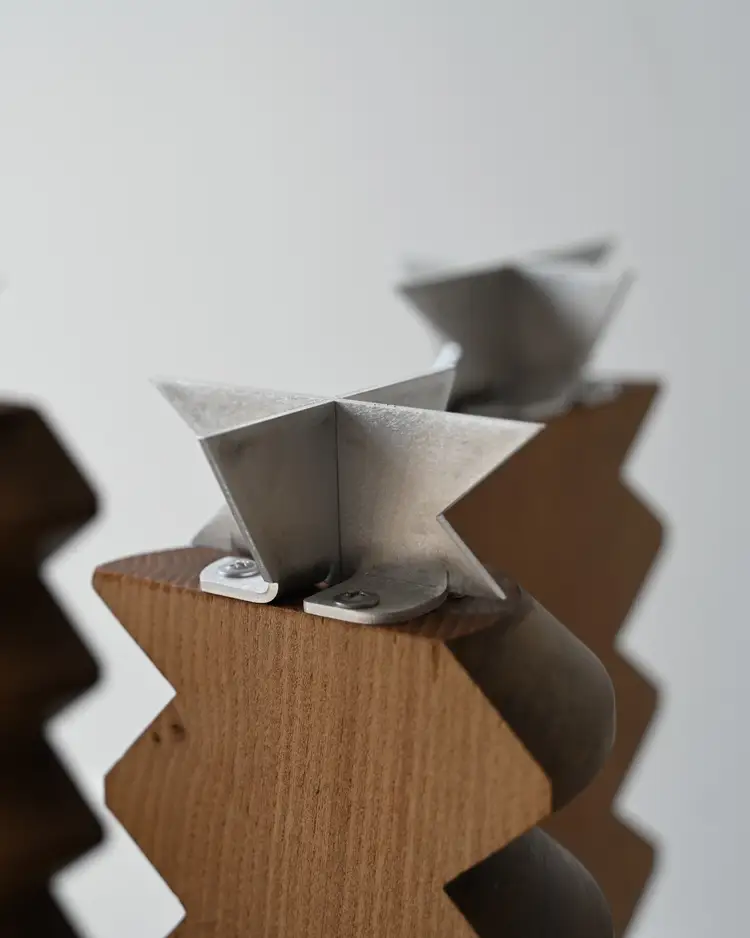
Metal details on the seat repeat the screw’s spiral profile. The old shape therefore appears in two materials: retained in the wood and interpreted again above it. This repetition gives the stool continuity without making every part look alike.
The contrast is useful to the design. The timber carries the irregularity of a found object, while the aluminium makes the new assembly legible. Rather than covering the marks of the previous use, the designers place them where they can be seen and understood.
Presented through FRGMNT during Paris Design Week in September 2026, LE PRESSOIR is a one-off piece. Its form depends on the particular component available, making the process closer to working with a specific architectural fragment than manufacturing an interchangeable part.
The story is strongest when the photographs show both the complete stool and its connections. Close views of the thread, the aluminium cross and the seat explain how a single found object becomes a new arrangement. Reuse is visible here through the construction itself.
The photographs published with the project are credited to Wallygatooor and FRGMNT. This feature describes the documented piece and its 2026 presentation, rather than a production collection.